- DIRECT CONTACTS:
- +256 779 116 947
- +256 758 566 300
- info@gorillavistasafaris.com

Tree-Climbing Lions in Ishasha, Queen Elizabeth National Park
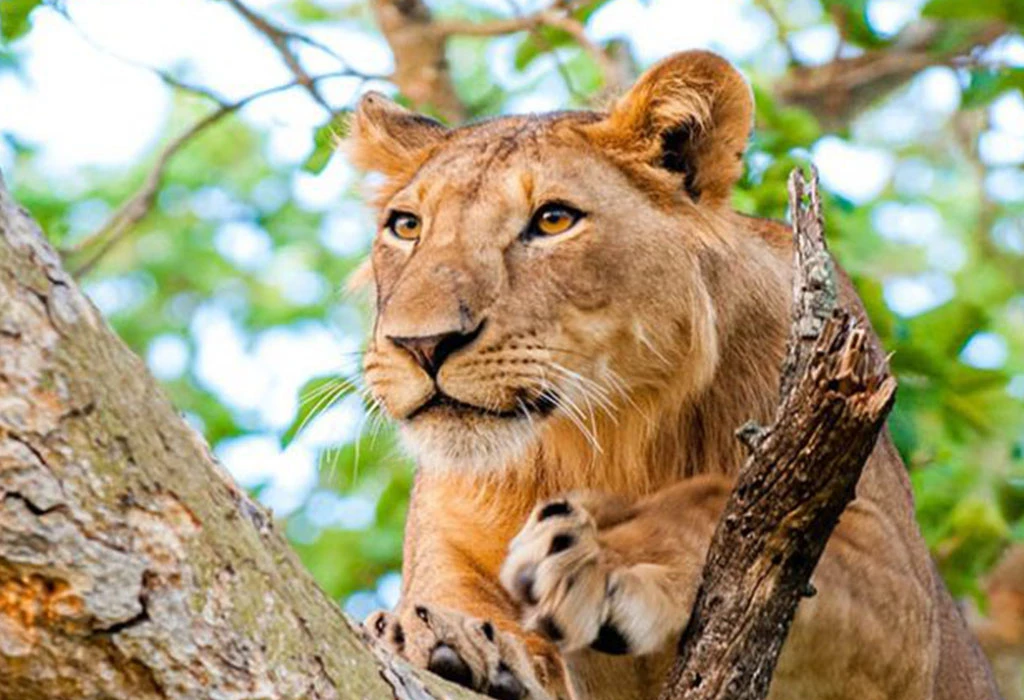
Tree-climbing lions are among the most fascinating wildlife attractions in Uganda. Unlike the typical image of lions resting on the ground, the lions in the Ishasha sector of Queen Elizabeth National Park often climb into the branches of large trees, where they spend hours resting, sleeping, and watching the surrounding plains.
Ishasha lies in the southern part of Queen Elizabeth National Park and is particularly famous for these unusual lions. Although lions are found in several Ugandan national parks, including Murchison Falls and Kidepo Valley, Ishasha offers one of the country’s best-known opportunities to observe lions resting in trees.
For visitors planning a Uganda safari, seeing a lion comfortably stretched across a tree branch creates a memorable wildlife encounter. The sight is especially striking when a large male lion rests several metres above the ground while keeping an eye on the plains below.
Where to See Tree-Climbing Lions in Uganda
The Ishasha sector is located in the southern section of Queen Elizabeth National Park, close to the border with the Democratic Republic of Congo. Its open savannah landscapes, woodland areas, and scattered fig and acacia trees create suitable conditions for the lions that climb trees.
Tree-climbing lions are not unique to Uganda. Similar behaviour has also been documented in Tanzania, particularly around Lake Manyara. However, Ishasha has become particularly well known for its tree-climbing lions because visitors have regular opportunities to encounter them during game drives.
The behaviour remains unusual because most lions spend much of their time on the ground. As a result, watching them settle into the branches of a large tree provides a different perspective on one of Africa’s most famous predators.
Why Do the Lions Climb Trees?
Researchers and wildlife observers have suggested several possible reasons for this unusual behaviour. One important factor may be the need to escape insects. During wet periods, insects can become abundant in the savannah. Tsetse flies and other biting insects can irritate wildlife, including lions. By moving into trees, lions may reduce their exposure to insects on the ground.
Heat may also influence their behaviour. Queen Elizabeth National Park can become hot during the day, particularly in the open savannah. A raised tree branch can provide a more comfortable resting place, while the breeze above the ground may help the lions cool down.
Another possible reason is visibility. From a tree, a lion can look across a wider area of the surrounding grassland. Although lions do most of their hunting on the ground, a higher position may allow them to observe antelopes, Uganda kobs, warthogs, and other animals moving through the plains.
Most importantly, the trees provide a convenient place for the lions to rest after feeding. After a successful hunt, lions can spend many hours resting while digesting their food. A strong, broad branch offers an elevated resting platform away from the busy activity on the ground.
The Trees Favoured by Ishasha Lions
The lions generally choose trees with broad, sturdy branches that can support their weight. Sycamore fig trees and acacia trees are among the most commonly associated with this behaviour in Ishasha.
These trees offer more than just a place to climb. Their branches provide shade during hot periods and some protection from rain. The wide structure also gives the lions enough room to stretch out comfortably.
For photographers, these trees create excellent wildlife scenes. A lion lying across a thick branch against the backdrop of the Ishasha savannah makes a distinctive safari photograph.
What Can You See During an Ishasha Game Drive?
A game drive through Ishasha offers much more than an opportunity to search for tree-climbing lions. The sector supports a variety of wildlife, and the open plains provide an excellent setting for observing animals in their natural environment.
Uganda kobs are among the animals commonly associated with the area. Visitors may also encounter buffaloes, elephants, antelopes, warthogs, and other species while exploring the savannah. Leopards and spotted hyenas also occur in Queen Elizabeth National Park, although sightings of these predators depend on conditions and chance.
The wider park adds even more diversity to a safari. Visitors can explore the Kasenyi plains, take a boat cruise along the Kazinga Channel, and visit areas such as Kyambura Gorge for chimpanzee trekking. The park also supports numerous bird species and other primates.
Therefore, combining Ishasha with other areas of Queen Elizabeth National Park allows travellers to experience several different habitats and wildlife encounters during one safari.
The Best Time to Look for Tree-Climbing Lions
Tree-climbing lions may not remain in the trees throughout the entire day. Their behaviour can change depending on weather, temperature, feeding activity, and other conditions.
As the day becomes warmer, however, visitors may find lions resting in the branches of large trees. A morning or afternoon game drive can provide opportunities to search for them, although wildlife sightings can never be guaranteed.
Your safari guide plays an important role in locating the lions. Experienced guides know the areas where the animals are frequently seen and can communicate with other guides about recent sightings. Patience is also essential because wildlife does not follow a fixed schedule.
Conservation Challenges Facing the Lions
Despite their popularity with visitors, lions in Queen Elizabeth National Park face several conservation challenges. Human-wildlife conflict remains a concern in communities surrounding the park. Lions can sometimes move beyond protected areas and come into contact with livestock, creating conflict with local communities.
Poisoning and retaliatory killing have also been reported as threats to lions in the region. In April 2018, several lions were found dead in the Ishasha area in an incident that was linked to poisoning. Such events highlight the challenges involved in protecting predators while supporting communities that live close to wildlife habitats.
Natural mortality, competition between prides, and the killing of cubs by dominant males can also influence lion populations. Conservation authorities and communities therefore have an important role to play in protecting these animals and reducing conflict around the park.
More Than Just Tree-Climbing Lions
Although the tree-climbing lions are one of Ishasha’s most recognisable attractions, Queen Elizabeth National Park offers a much broader safari experience.
The park’s landscapes stretch from open savannah to woodland and wetland habitats. In the distance, visitors can often see the Rwenzori Mountains, also known as the Mountains of the Moon. The park also surrounds Lakes Edward and George, which are connected by the Kazinga Channel.
A boat cruise along the Kazinga Channel provides another perspective of the park. Hippos gather along the water, while crocodiles and elephants can often be seen near the shoreline. The channel also attracts numerous waterbirds, making the cruise appealing to both wildlife enthusiasts and birdwatchers.
Visitors can also explore Kyambura Gorge, where chimpanzee trekking offers an opportunity to encounter one of Uganda’s closest living relatives to humans. Cultural experiences around the region can further connect travellers with communities living near the park.
Planning a Safari to See the Tree-Climbing Lions
A visit to Ishasha can form part of a wider Uganda safari itinerary. Travellers can combine the sector with other parts of Queen Elizabeth National Park or continue to Bwindi Impenetrable National Park for gorilla trekking.
Gorilla Vista Safaris can help travellers organise safari arrangements that include game drives in Ishasha, accommodation, transportation, park activities, and other experiences according to their travel plans.
The tree-climbing lions remain one of the most intriguing sights in Queen Elizabeth National Park. Watching a powerful lion resting quietly on a high branch challenges the usual image of a predator roaming across the savannah. Combined with the park’s diverse wildlife, dramatic scenery, waterways, and primate experiences, an Ishasha safari offers travellers an opportunity to discover one of Uganda’s most distinctive wildlife destinations.