- DIRECT CONTACTS:
- +256 779 116 947
- +256 758 566 300
- info@gorillavistasafaris.com

How Strong Is a Gorilla? Discover the Incredible Strength of Silverback Gorillas
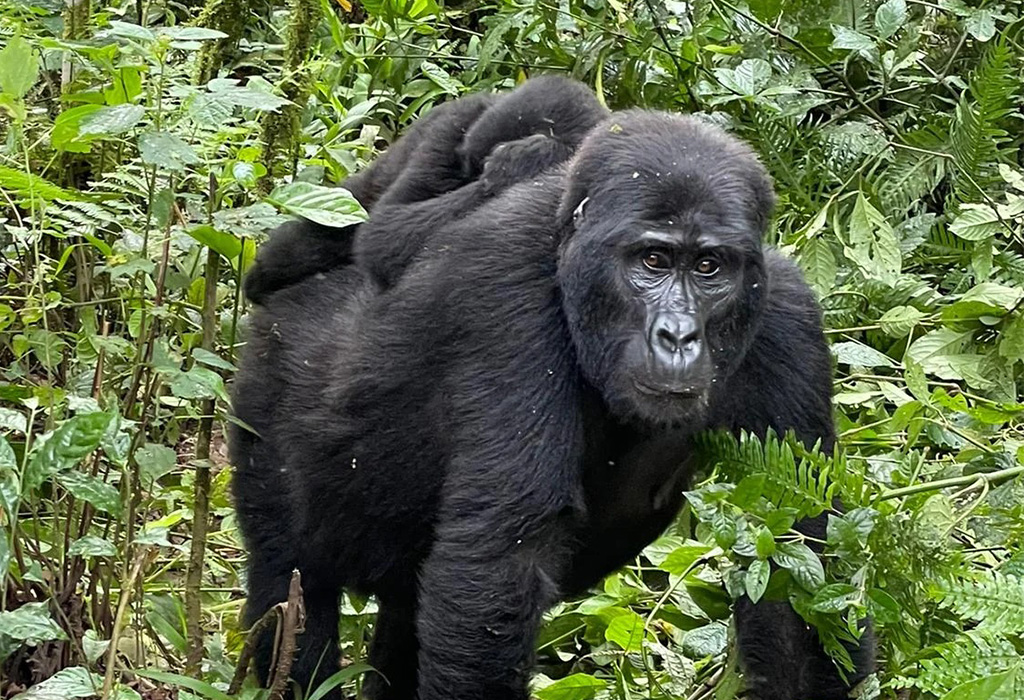
How strong is a gorilla? It is one of the most fascinating questions people ask before going on a gorilla trekking adventure. Gorillas are incredibly powerful animals, and their strength comes from a combination of muscular bodies, powerful arms, strong jaws, and a lifestyle built around moving through dense forests.
A mature silverback can weigh well over 150 kilograms, with a broad chest, thick shoulders, long arms, and powerful legs. Although people often repeat claims that gorillas are several times stronger than humans or can lift more than 800 kilograms, scientists have not established a reliable maximum lifting capacity for wild gorillas. Therefore, it is better to focus on the remarkable strength they demonstrate naturally rather than on exaggerated weightlifting comparisons.
When you watch a silverback move through the forest, its strength becomes obvious. It can push through thick vegetation, break branches, climb when necessary, and move its enormous body with surprising control. For visitors trekking with Gorilla Vista Safaris, witnessing these natural displays of power can be one of the most memorable parts of the experience.
The Secrets Behind Gorilla Strength
So, how strong are gorillas, and what makes them so powerful? Their strength does not come from training in the way human athletes develop muscle. Instead, their bodies have evolved to handle the physical demands of life in the forest.
Gorillas spend much of their day walking, climbing, feeding, pushing through vegetation, and supporting their large bodies with their limbs. Their upper bodies are especially powerful, while their long arms help them move efficiently through difficult terrain.
Several physical and behavioral characteristics contribute to gorilla strength:
- Dense muscle around the shoulders, chest, arms, and back.
- Powerful jaws designed for processing tough vegetation.
- Long arms that provide excellent leverage.
- Strong hands and fingers for gripping branches and vegetation.
- A large body supported by a robust skeletal structure.
- Daily movement through challenging forest environments.
Furthermore, their plant-based diet provides the energy they need for their active lifestyle. Gorillas eat large quantities of leaves, shoots, stems, bark, flowers, and fruit when available. Their constant feeding and movement help maintain their impressive physical condition.
How Strong Is a Silverback Gorilla Compared With a Female?
Male and female gorillas are both strong, but adult males develop significantly greater muscle mass. A mature silverback can become much larger and more muscular than an adult female, particularly around the shoulders, chest, arms, and neck.
This difference becomes especially noticeable when a silverback stands upright. Its broad chest and enormous shoulders create the powerful appearance that has made these animals famous around the world.
Female gorillas, however, should never be considered weak. They travel considerable distances while foraging, carry and care for their young, climb when necessary, and move through thick forest almost every day.
The greater physical development of males relates partly to their social role. Silverbacks may protect the group from threats, compete with rival males, and maintain order within the family. Consequently, natural selection favored males with larger bodies and greater physical strength.
Why Are Silverback Gorillas So Strong?
The answer to how strong is a gorilla becomes clearer when you consider the animal’s daily responsibilities. A silverback needs strength for much more than fighting.
For example, a dominant male may need to:
- Protect the family from potential threats.
- Challenge or deter rival males.
- Push through dense vegetation.
- Travel across steep forest terrain.
- Move branches and vegetation while feeding.
- Support and control its large body during movement.
Most importantly, gorillas do not spend their lives looking for fights. Their strength mainly supports survival, movement, feeding, and social protection.
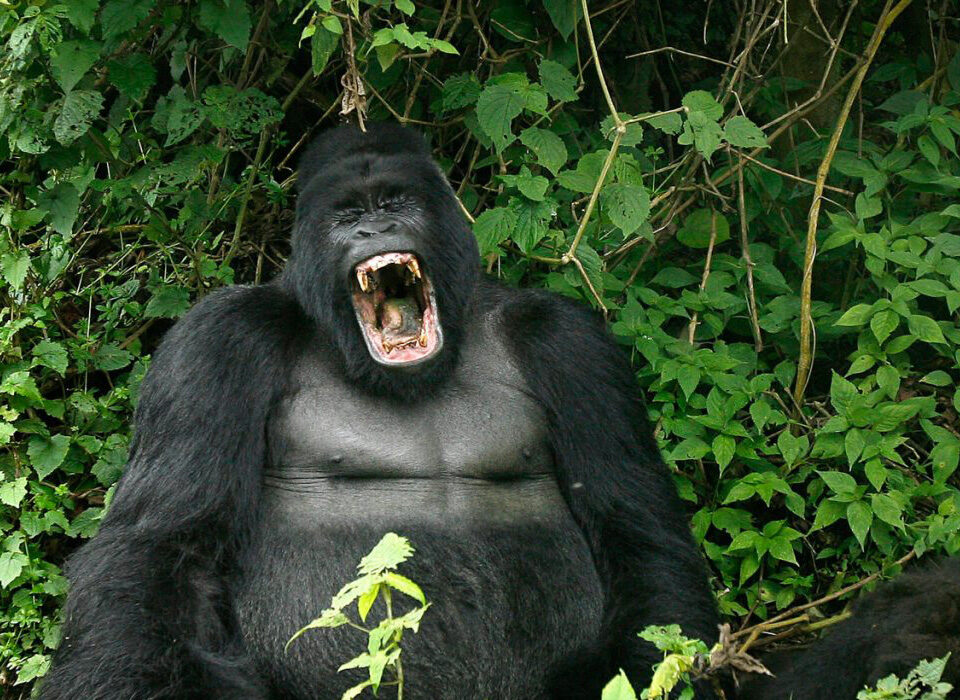
A silverback may appear intimidating when it beats its chest, vocalizes, or charges during a display. Nevertheless, these behaviors often serve as warnings rather than an attempt to cause physical harm.
Gorilla Bite Force: How Powerful Is a Gorilla’s Jaw?
Another interesting aspect of gorilla strength is the power of the jaw. Gorillas have large canine teeth and strong jaw muscles, which help them process tough vegetation and defend themselves when necessary.
A figure of approximately 1,300 PSI is frequently reported online as the gorilla bite force. However, this number should be treated cautiously because reliable direct measurements from wild gorillas are limited. What is clear is that gorillas possess exceptionally strong jaws relative to humans.
Their powerful chewing muscles make sense when you consider their diet. Gorillas regularly consume fibrous plant material that requires considerable chewing. Their teeth and jaws have therefore evolved to handle foods that would be difficult for humans to process.
Fortunately, gorillas rarely use their powerful jaws aggressively toward people. During responsible gorilla trekking, visitors should follow ranger instructions and maintain the required distance from the animals.
Gorilla Size and Physical Build
A gorilla’s impressive strength is closely connected to its physical structure. Mountain gorillas, for example, have compact, muscular bodies adapted to life in high-altitude forests.
Height
Gorillas can stand approximately 4 to 6 feet tall when upright, although they normally move using all four limbs. Their actual appearance can seem much larger because of their broad shoulders, thick muscles, and long arms.
Weight
Adult male gorillas are considerably heavier than females. Mature silverbacks can commonly weigh around 140 to 200 kilograms, although individual weight varies depending on species, age, health, and habitat.
Arm Span
Their long arms are another important part of their physical strength. A large gorilla can have an arm span greater than its standing height, giving it excellent leverage when climbing, pulling, supporting its body, or moving through vegetation.
You do not need to see a gorilla fighting to understand how strong a gorilla really is. Their everyday activities provide some of the best evidence.
Everyday Examples of Gorilla Strength
A silverback can push aside heavy vegetation while searching for food. It can break branches, manipulate stems, and move through thick forest without appearing to struggle. Even simple movements can look impressive because of the animal’s enormous size.
You may also observe gorillas:
- Pulling vegetation toward themselves while feeding.
- Breaking stems and branches to reach nutritious leaves.
- Moving through dense undergrowth with ease.
- Climbing or supporting themselves on strong branches.
- Building nests from leaves and vegetation.
- Playing and wrestling with other members of the family.
These activities demonstrate practical strength rather than laboratory-tested lifting ability. In other words, gorillas use their power naturally as part of everyday life.
Gorilla Strength vs Human Strength
Comparing gorilla vs human strength is difficult because humans and gorillas have very different body structures, lifestyles, and physical abilities. There is no scientifically established multiplier that accurately describes exactly how many times stronger a gorilla is than every human.
Nevertheless, the physical difference is obvious.
A gorilla has much greater upper-body muscle development than the average human. Its shoulders, arms, chest, hands, and neck are built for supporting a large body and moving through challenging environments.
Humans, on the other hand, have evolved for endurance walking, running, fine motor skills, tool use, and other activities. We should therefore avoid reducing the comparison to a single lifting number.
The important point is that a mature silverback possesses extraordinary natural strength relative to humans, particularly in its upper body.
How Gorillas Use Their Strength in the Wild
Gorilla power serves a practical purpose. These animals do not develop large muscles simply to look impressive. Their strength helps them survive in environments where they must constantly move, feed, socialize, and protect their families.
A silverback’s physical presence can also discourage rival males and potential threats. When necessary, it may display its size through chest beating, vocalizations, charging, or other intimidating behaviors.
However, these displays are often carefully controlled. Gorillas are highly social animals with complex relationships, and their daily lives involve feeding, grooming, resting, playing, and caring for young ones.
That contrast is one of the most fascinating things about gorillas. They possess enormous physical power while generally living calm and social lives.
Seeing Silverback Gorillas in the Wild
Seeing a silverback in its natural habitat gives you a completely different understanding of gorilla strength. Pictures and videos can show you their size, but being several meters away from a powerful silverback makes the experience much more real.
During a gorilla trekking experience, you may find a family feeding quietly beneath the forest canopy. The silverback might be resting nearby while younger gorillas play around it. Suddenly, the male may stand, move through the vegetation, or break a branch while continuing its normal activities.
For travelers visiting Uganda, Gorilla Vista Safaris can help organize responsible gorilla trekking experiences in destinations where visitors can observe these remarkable animals in their natural environment.
Best Places to See Silverback Gorillas
Mountain gorillas survive in a limited region of East-Central Africa. Their remaining populations are protected through national parks and conservation programs in Uganda, Rwanda, and the Democratic Republic of Congo.
The main destinations include:
- Bwindi Impenetrable National Park, Uganda: Famous for its mountain gorilla population and several habituated gorilla families.
- Mgahinga Gorilla National Park, Uganda: Part of the larger Virunga landscape and home to mountain gorillas and golden monkeys.
- Volcanoes National Park, Rwanda: Located within the Virunga Mountains and well known for gorilla trekking.
- Virunga National Park, Democratic Republic of Congo: One of Africa’s important mountain gorilla conservation areas.
These protected forests provide critical habitat while carefully managed tourism helps generate revenue and awareness for conservation.
What Is Gorilla Trekking Like?
Gorilla trekking involves hiking through forest habitat with trained rangers and guides who help locate a habituated gorilla family. The trek can take a few hours or considerably longer, depending on where the gorillas have moved.
Once the family is located, visitors observe the gorillas from a safe distance for the permitted viewing period. You may see adults feeding, grooming, resting, playing, or caring for young gorillas.
The experience is not simply about seeing a powerful animal. It also gives travelers an opportunity to appreciate gorilla intelligence, social relationships, communication, and family life.
For many visitors, the most powerful moment is not watching a silverback display its strength. Instead, it is seeing the animal behave peacefully while surrounded by its family.
Gorilla Trekking Safety Tips
Understanding how strong is a gorilla also explains why responsible trekking rules matter. Even a calm gorilla remains a large and powerful wild animal. Visitors should therefore respect the animals and follow their ranger’s instructions throughout the experience.
Important guidelines include:
- Maintain the required distance from the gorillas.
- Avoid sudden movements or attempts to approach them.
- Remain calm if a gorilla moves closer.
- Never run away from a gorilla.
- Speak quietly and avoid unnecessary noise.
- Do not use flash photography.
- Follow all instructions provided by your ranger.
- Avoid visiting gorillas when you are sick, as infectious diseases can threaten them.
These measures protect both tourists and gorillas. More importantly, they help ensure that tourism remains a responsible part of gorilla conservation.
The Real Secret Behind Gorilla Strength
So, how strong is a gorilla? The honest answer is that gorillas are extraordinarily powerful, but science cannot give us one universally accepted number for their maximum strength.
Their impressive power comes from their muscular bodies, strong jaws, long arms, powerful hands, large frames, and evolutionary adaptation to life in the forest. Silverbacks, in particular, develop remarkable upper-body strength that helps them protect their families and navigate their environment.
Rather than focusing only on viral claims about how much a gorilla can lift, it is more meaningful to observe what these animals actually do. Breaking branches, moving heavy vegetation, climbing, wrestling, foraging, and supporting a large body through dense forest all demonstrate just how powerful they are.
Conclusion: How Strong Is a Gorilla?
How strong is a gorilla? Strong enough to make even an experienced wildlife enthusiast stop and appreciate the incredible power of nature. A mature silverback has a muscular body, powerful arms, strong jaws, and physical abilities far beyond those of the average human.
Yet, strength is only one part of what makes gorillas remarkable. They are intelligent, social, protective, and surprisingly gentle animals. Their power mainly supports survival and family life rather than unnecessary aggression.
If you have the opportunity to see a silverback during a gorilla trekking adventure in Uganda, Rwanda, or the Democratic Republic of Congo, pay attention to the small details. Watch how it moves, feeds, interacts with its family, and controls its enormous body.
That is where you truly understand gorilla strength. The most impressive thing about a silverback is not simply how powerful it looks, but how calmly it controls that power.