- DIRECT CONTACTS:
- +256 779 116 947
- +256 758 566 300
- info@gorillavistasafaris.com

Chimpanzee Trekking in Gombe and Mahale Mountains
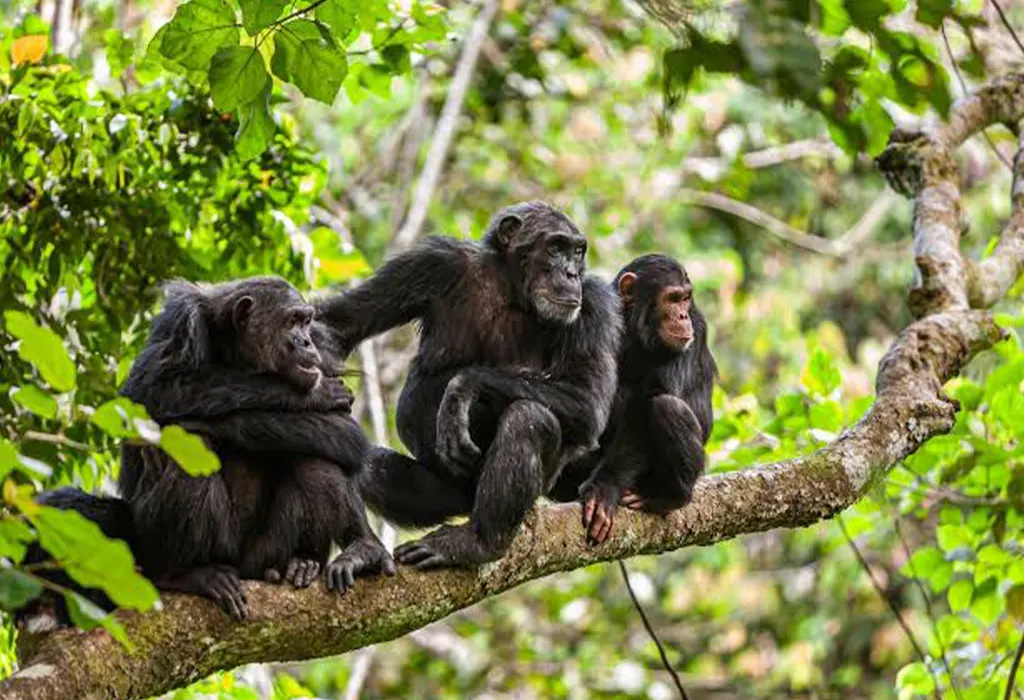
Chimpanzee trekking in Tanzania offers an intimate wildlife experience that takes travelers beyond the traditional safari vehicle. Instead of watching animals from a distance across open savannah, you walk through tropical forests in search of wild chimpanzees. Along the way, trained guides help you understand the forest, identify signs of wildlife, and locate habituated chimpanzee communities.
Tanzania has two outstanding destinations for this experience: Gombe Stream National Park and Mahale Mountains National Park. Both lie along the spectacular shores of Lake Tanganyika in western Tanzania. However, each destination provides a different atmosphere, landscape, and style of chimpanzee encounter.
For travelers planning a primate adventure with Gorilla Vista Safaris, understanding the differences between Gombe and Mahale makes it easier to plan an itinerary around your interests, fitness level, available time, and preferred travel style.
What Is Chimpanzee Trekking in Tanzania?
Chimpanzee trekking involves walking through natural forest with trained guides and park staff while searching for wild chimpanzee communities. Unlike a conventional game drive, you become part of the forest environment. You listen for calls, examine tracks, and follow trails while guides use their knowledge of chimpanzee behavior and movements to locate the animals.
Once you find the chimpanzees, you may watch them feeding, grooming, climbing, resting, communicating, or caring for their young. Because chimpanzees are constantly moving, no two trekking experiences are exactly alike.
In addition, the forest itself becomes part of the adventure. You may hear birds calling above the canopy, see monkeys moving through the trees, and experience the changing sounds of the rainforest around you.
A typical chimpanzee trekking experience involves:
- Guided walking through forest habitat.
- Searching for habituated chimpanzee communities.
- Observing natural chimpanzee behavior.
- Learning about forest ecology and conservation.
- Following health and wildlife-protection guidelines.
Consequently, chimpanzee trekking in Tanzania is not simply about reaching the animals. It is about experiencing their environment while learning how these remarkable primates live.
Gombe Stream National Park
Gombe Stream National Park is located along the northeastern shores of Lake Tanganyika in western Tanzania. Covering approximately 35 square kilometers, it is Tanzania’s smallest national park. Nevertheless, its importance extends far beyond its size.
Gombe became internationally recognized through the pioneering research of Dr. Jane Goodall, who began studying chimpanzees there in 1960. Her long-term research transformed scientific knowledge about chimpanzee behavior, social relationships, communication, and tool use.
Today, Gombe remains an important destination for travelers interested in primates and conservation. Its forested valleys, steep slopes, streams, and lakeshore create an impressive setting for Gombe chimpanzee trekking.
Because the park is relatively compact, visitors often experience a strong sense of intimacy with the surrounding forest. However, the terrain can still be demanding, with steep climbs and descents along some trails.
Chimpanzees in Gombe
Gombe protects several chimpanzee communities, including the famous Kasekela community, which has been studied for decades. This remarkable research history gives Gombe a unique place in the story of modern primatology.
During a trek, you may see chimpanzees feeding, grooming, calling to one another, resting, or moving between trees. Their behavior changes throughout the day, so guides cannot guarantee exactly what you will see.
Moreover, visiting Gombe provides an opportunity to walk through the same landscape that has supported decades of scientific research. For travelers fascinated by chimpanzee behavior, conservation, and wildlife research, this connection adds considerable depth to the experience.
Mahale Mountains National Park
Further south along Lake Tanganyika lies Mahale Mountains National Park, a much larger and more remote protected area. The park covers roughly 1,600 square kilometers and protects a combination of mountain forests, woodland, streams, beaches, and lakeshore habitats.
The dramatic Mahale Mountains dominate the landscape, while Mount Nkungwe rises to approximately 2,462 meters. Dense vegetation on the mountain slopes provides important habitat for chimpanzees and numerous other species.
However, Mahale’s remoteness is part of its attraction. Travelers commonly reach the area by boat or charter aircraft, depending on their itinerary. Therefore, getting there can feel like an expedition rather than an ordinary park transfer.
For visitors searching for chimpanzee trekking in Mahale Mountains National Park, the destination offers an unusual combination of primate encounters, mountain scenery, and Lake Tanganyika relaxation.
Chimpanzees in Mahale Mountains
Mahale supports an important chimpanzee population, including habituated communities that are accustomed to carefully controlled human observation. During trekking, trained guides help visitors locate the chimpanzees while ensuring that appropriate wildlife-viewing practices are followed.
A forest encounter can involve watching large groups feeding, grooming, resting, vocalizing, or moving through the vegetation. At other times, the chimpanzees may remain high in the trees or move quickly through dense forest.
Furthermore, Mahale offers something beyond chimpanzee viewing. After spending time on the trails, travelers can return to the lakeshore and enjoy the peaceful scenery of Lake Tanganyika. This combination makes the destination particularly distinctive.
Gombe or Mahale: Understanding the Difference
Rather than asking which park is universally better, it is more useful to consider what each destination offers.
Gombe is strongly associated with Jane Goodall’s research, long-term chimpanzee studies, and an intimate forest environment. It can appeal to travelers who want to connect their wildlife experience with the history of primate research.
Mahale, meanwhile, combines chimpanzee trekking with a larger wilderness setting. Its mountains, forests, beaches, and remote location create opportunities for a broader nature-focused experience.
The main differences include:
| Feature | Gombe | Mahale |
|---|---|---|
| Setting | Compact forest and steep valleys | Large mountain and forest wilderness |
| Famous for | Jane Goodall’s chimpanzee research | Chimpanzees and remote lakeside scenery |
| Lake | Lake Tanganyika | Lake Tanganyika |
| Atmosphere | Intimate and research-oriented | Remote and wilderness-focused |
| Access | Usually via Kigoma and boat | Boat or charter aircraft |
| Other appeal | Primatology and forest exploration | Mountains, beaches, forest, and lake |
Therefore, your choice should depend on the type of experience you want rather than simply comparing the two parks.
Best Time for Chimpanzee Trekking in Tanzania
Chimpanzee trekking in Tanzania is possible throughout the year. However, weather conditions can influence trail conditions, forest vegetation, and the overall comfort of hiking.
The drier period, particularly from June to October, is often convenient for travelers because trails can be easier to navigate. Nevertheless, chimpanzee movements are naturally unpredictable, so dry weather does not guarantee a particular type of encounter.
The wetter months bring more rainfall, but they also keep the forests lush and vibrant. Travelers who enjoy greener landscapes and quieter travel periods may find this season appealing.
Before booking, discuss your preferred travel dates with Gorilla Vista Safaris so your itinerary can take seasonal conditions and transport logistics into account.
How Difficult Is Chimpanzee Trekking?
Chimpanzee trekking requires reasonable physical fitness. Both destinations involve walking on uneven forest trails, while some sections can be steep. At Gombe, the landscape rises and falls sharply around forested valleys. In Mahale, trekkers may walk farther through rugged mountain and forest terrain.
Importantly, the chimpanzees determine much of the trekking experience. Guides may locate a community relatively quickly on one day, while another trek can involve considerably more walking.
For a more comfortable experience, pack:
- Sturdy, comfortable hiking shoes.
- Lightweight, breathable clothing.
- Sufficient drinking water.
- Insect repellent.
- A waterproof jacket or rain protection.
- A small daypack for personal essentials.
Most importantly, follow your guide’s instructions throughout the trek. Their guidance helps protect both visitors and chimpanzees.
Chimpanzee Trekking Permits and Regulations
Travelers need the appropriate park entry and guided trekking arrangements before participating in chimpanzee activities. Because park fees, access arrangements, and regulations can change, confirm the current requirements before traveling.
Wild chimpanzees are susceptible to human diseases, making responsible behavior particularly important. Visitors should never attempt to touch, feed, or deliberately approach the animals.
Health precautions are equally important. If you are feeling unwell, inform your guide before entering the forest. Even illnesses that seem minor to humans can pose risks to wild primates.
During the encounter, guides also help visitors maintain appropriate viewing behavior and follow the regulations governing wildlife observation.
Getting to Gombe Stream National Park
Kigoma is the main gateway for visitors traveling to Gombe. Travelers can reach Kigoma by air and then continue toward the park by boat.
Because there is no conventional road network leading directly into Gombe, the boat journey across Lake Tanganyika forms an important part of the adventure. As the forested shoreline comes into view, the remoteness of the park becomes increasingly apparent.
This combination of lake travel and forest trekking gives Gombe a distinctive character that differs considerably from Tanzania’s more accessible safari destinations.
Getting to Mahale Mountains National Park
Mahale is even more remote than Gombe. Depending on the itinerary, visitors can travel by boat from the Kigoma area or use a charter flight.
The journey can take time, but that remoteness is precisely what gives Mahale its wilderness atmosphere. Travelers approaching by boat can enjoy views of Lake Tanganyika before arriving beneath the dramatic mountain landscape.
Consequently, Mahale chimpanzee trekking works particularly well for travelers who have enough time to appreciate the journey as part of the safari rather than simply treating transportation as a transfer.
Other Wildlife to See
Chimpanzees are the primary attraction, but they are not the only wildlife you may encounter. Both parks support other primates, including red colobus monkeys, red-tailed monkeys, and baboons.
Birdwatchers can also enjoy forest and lakeshore species. Around Lake Tanganyika, visitors may encounter fish eagles and other water-associated birds, while the forest provides opportunities to observe a variety of smaller species.
In addition, the lake itself adds another dimension to the journey. Depending on the itinerary, travelers can enjoy lakeside scenery and relaxation between trekking activities.
Accommodation in Gombe and Mahale
Accommodation varies between the two destinations. Gombe has relatively simple accommodation options and camps near the park, while Mahale offers lakeside camps and lodges with different levels of comfort.
Staying close to the park can make daily activities more convenient because you spend less time traveling to and from the forest. Some accommodation providers can also assist with meals, boat transfers, and guided activities.
For travelers combining chimpanzee trekking with other Tanzanian experiences, accommodation should be selected according to the overall route and available transport connections.
Combining Gombe and Mahale
Travelers with additional time can combine Gombe and Mahale chimpanzee trekking in one extended western Tanzania itinerary. This approach provides an opportunity to experience two different chimpanzee destinations along Lake Tanganyika.
For example, an itinerary can include time in Kigoma, several days around Gombe, and additional days in Mahale. You can then incorporate lakeside activities and other regional experiences where time and logistics allow.
Although combining the parks requires careful planning, it creates a comprehensive primate-focused journey for travelers with a particular interest in chimpanzees, photography, conservation, and forest ecosystems.
Chimpanzee Conservation in Tanzania
Gombe and Mahale play important roles in chimpanzee conservation and research. Scientists, conservationists, park authorities, and local communities contribute to protecting habitats and monitoring wildlife populations.
Tourism can also contribute to protected-area management and local economies through park fees, accommodation, guiding, transport, and other tourism-related services. Responsible travel therefore forms part of a wider conservation framework.
Visitors can support these efforts by following park regulations, respecting wildlife, avoiding unnecessary disturbance, and choosing responsible tourism services.
Plan Your Chimpanzee Trekking Safari in Tanzania
Chimpanzee trekking in Tanzania offers much more than a close encounter with primates. It allows travelers to enter remote forests, observe complex chimpanzee behavior, experience Lake Tanganyika, and learn about some of Africa’s most important conservation and research landscapes.
Gombe provides a strong connection to Jane Goodall’s pioneering research and the long history of chimpanzee studies. Mahale, meanwhile, combines chimpanzee encounters with dramatic mountains, forests, beaches, and an exceptionally remote setting.
Ultimately, the right destination depends on your interests, available time, preferred accommodation, fitness level, and travel plans. With careful preparation, either destination can become a memorable part of a Tanzanian wildlife adventure.
Gorilla Vista Safaris can assist travelers planning chimpanzee trekking in Tanzania, including accommodation, transportation, park arrangements, guided activities, and broader safari logistics. With the right itinerary, your journey can combine exceptional primate encounters with the landscapes and cultural experiences of western Tanzania.