- DIRECT CONTACTS:
- +256 779 116 947
- +256 758 566 300
- info@gorillavistasafaris.com

Are Chimpanzees Friendly to Humans?
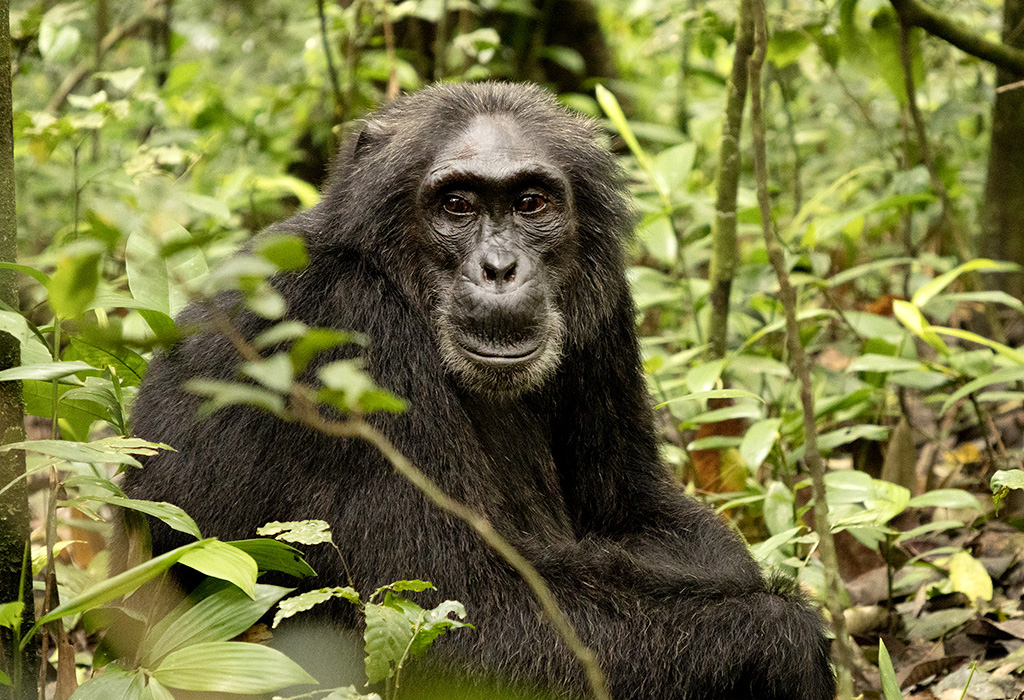
Chimpanzees are among our closest living relatives in the animal kingdom, sharing approximately 98.8% of their DNA with humans. Their intelligence, expressive faces, complex social relationships, and ability to use tools make them fascinating animals to observe. However, their similarities to humans can sometimes create misunderstandings about their behaviour.
So, are chimpanzees friendly to humans? The answer depends on the circumstances, the individual chimpanzee, and the nature of the interaction. Chimpanzees can form strong bonds with familiar caregivers, display social affection, and show responses that researchers interpret as signs of empathy. Nevertheless, they remain wild animals with their own instincts, needs, and social rules.
Whether you encounter chimpanzees during a wildlife adventure in Uganda or learn about them in a sanctuary, understanding their behaviour is essential. At Gorilla Vista Safaris, responsible wildlife tourism begins with appreciating animals in their natural environments and respecting the distance they need to remain safe.
In this guide, we explore chimpanzee behaviour, their relationships with humans, the reasons they sometimes become aggressive, and the safest ways to observe them.
What Are Chimpanzees?
Chimpanzees (Pan troglodytes) are great apes native to the forests and woodland savannas of West and Central Africa. They live in social communities that may contain dozens or more individuals, although their groups do not always travel together. Instead, smaller parties regularly form and separate as members search for food, socialise, or move through their territory.
Chimpanzees are highly intelligent animals with impressive problem-solving abilities. They use sticks to extract insects, employ stones to crack nuts in some populations, communicate through vocalisations and gestures, and learn behaviours from other members of their communities.
Their daily activities also involve grooming, playing, raising young, establishing social relationships, and cooperating with other chimpanzees. These behaviours help explain why people often find them relatable.
However, intelligence and social complexity do not mean that chimpanzees behave like humans. Their needs and responses differ from ours, so understanding them requires respect rather than assumptions.
How Closely Are Chimpanzees Related to Humans?
Chimpanzees and humans share a common ancestor that lived millions of years ago. Although scientists often describe chimpanzees as sharing approximately 98–99% of their DNA with humans, the exact percentage depends on how researchers compare genetic sequences.
This close evolutionary relationship helps explain several similarities between the two species.
For example, chimpanzees can:
- Use tools to obtain food and solve practical problems.
- Develop long-lasting relationships within their communities.
- Learn behaviours by watching other individuals.
- Express excitement, distress, curiosity, and other emotional responses.
- Cooperate with companions and compete for food, territory, and social status.
Despite these similarities, chimpanzees have their own communication systems, social expectations, and survival strategies. Therefore, a behaviour that appears friendly to a human may have a different meaning within chimpanzee society.
Are Chimpanzees Friendly to Humans in the Wild?
Wild chimpanzees generally maintain their independence from humans. Their reactions vary according to previous experiences, the surrounding environment, and whether they perceive a person as a threat.
In areas where chimpanzees rarely encounter people, they may avoid human contact or move away when they notice visitors. In protected areas with established chimpanzee tourism, some individuals may be accustomed to seeing people accompanied by trained guides.
Nevertheless, familiarity does not guarantee friendliness.
Chimpanzees defend their territories, protect their young, compete for resources, and respond to unfamiliar situations in ways that humans cannot always predict. An animal that appears calm while feeding or grooming another chimpanzee may react differently if it feels threatened or disturbed.
During chimpanzee trekking in Uganda, visitors should therefore follow their guides’ instructions, remain with their group, and avoid approaching the animals independently.
The most responsible approach is to observe chimpanzees without trying to touch, feed, follow, or attract their attention. This protects both visitors and the chimpanzees while allowing the animals to continue their natural activities.
Are Chimpanzees Friendly to Humans in Captivity?
Chimpanzees living in zoos, sanctuaries, or other managed environments may become familiar with their caregivers. Some develop strong relationships with the people who provide food, enrichment, veterinary care, and daily support.
However, a chimpanzee that recognises a caregiver is not necessarily domesticated. Even an animal raised around humans retains its natural behaviours and physical capabilities.
Chimpanzees in Sanctuaries
Reputable sanctuaries provide rescued or formerly captive chimpanzees with specialised care, appropriate living environments, social opportunities, and activities that encourage natural behaviour.
Because caregivers may spend years looking after individual animals, some chimpanzees develop familiar relationships with them. Even so, responsible sanctuaries maintain professional boundaries and use appropriate safety measures.
Chimpanzees in Zoos
Modern zoos may provide chimpanzees with social groups, climbing structures, feeding enrichment, and veterinary supervision. Their interactions with keepers generally follow established safety procedures rather than relying on direct physical contact.
In both settings, the quality of care and the individual animal’s experiences influence behaviour. However, even a familiar chimpanzee should never be treated like a domestic dog or another household pet.
Why Do Chimpanzees Sometimes Attack Humans?
Although serious incidents are uncommon compared with the many opportunities people have to observe wildlife, chimpanzee attacks can cause severe injuries. Their strength, canine teeth, and unpredictable responses make close contact dangerous.
Understanding the reasons behind aggressive behaviour helps visitors avoid situations that could put people or animals at risk.
1. Fear and Perceived Threats
A chimpanzee may respond defensively when it feels cornered, startled, or threatened. Approaching too closely or blocking an animal’s movement can increase its stress.
Consequently, visitors should never try to get closer for a photograph or force an animal to remain in view.
2. Territorial Behaviour
Chimpanzees maintain territories and may react aggressively towards unfamiliar individuals or rival groups. Territorial behaviour is particularly important in wild populations, where access to food, space, and other resources influences survival.
Humans should never enter restricted areas or approach chimpanzees outside authorised viewing arrangements.
3. Stress and Frustration
Chimpanzees require complex social relationships, mental stimulation, and suitable environments. Poor living conditions, isolation, inappropriate handling, or stressful interactions can negatively affect their welfare.
However, aggression does not always have one obvious cause. Each situation depends on the individual animal and its circumstances.
4. Misreading Chimpanzee Body Language
Chimpanzees communicate through facial expressions, vocalisations, gestures, and body movements. Humans may misinterpret these signals because they assume that chimpanzees express themselves in the same way people do.
For example, a chimpanzee’s open-mouth display may be associated with excitement, play, fear, or other social situations. Its meaning depends on the wider context.
For this reason, visitors should not attempt to interpret every expression independently. Following a trained guide’s instructions is much safer than assuming an animal is comfortable.
How Do Chimpanzees Show Affection?
Chimpanzees have rich social lives, and many of their behaviours help maintain relationships within their communities. Some actions may look similar to human expressions of affection, although their precise meaning depends on the situation.
Common social behaviours include:
- Grooming: Chimpanzees carefully groom one another to maintain social bonds and support social relationships.
- Embracing: Some individuals embrace during greetings, reunions, or moments of social reassurance.
- Playing: Young chimpanzees often chase, wrestle, and play with other members of their group.
- Sharing and cooperation: In certain situations, chimpanzees cooperate, tolerate one another around food, or engage in other mutually beneficial activities.
- Comforting behaviours: Researchers have observed chimpanzees responding to distressed group members through contact and other social interactions.
These behaviours demonstrate the complexity of chimpanzee relationships. Nevertheless, they should not be interpreted as an invitation for humans to approach or touch the animals.
A chimpanzee that grooms another chimpanzee may be maintaining an established social relationship rather than expressing a type of affection that humans can easily understand.
Do Chimpanzees Feel Emotions and Show Empathy?
Chimpanzees display a range of behaviours associated with emotional responses, including excitement, fear, distress, curiosity, and social reassurance. Researchers have also documented behaviours that suggest sensitivity to the experiences of others.
For example, chimpanzees may approach distressed companions, engage in reassuring physical contact, or respond to social tension within their group.
Their ability to recognise social relationships and respond to other individuals contributes to their complex communities. However, researchers must interpret these behaviours carefully because observing an action does not always reveal exactly what an animal feels.
Although chimpanzees share many behavioural similarities with humans, their emotional experiences cannot be assumed to match ours in every respect.
Understanding these differences helps wildlife enthusiasts appreciate chimpanzees without projecting human expectations onto them.
Can Chimpanzees Be Kept as Pets?
Keeping chimpanzees as pets is strongly discouraged because their physical, social, and psychological needs are extremely difficult to meet in a domestic environment.
Chimpanzees need suitable space, complex enrichment, appropriate nutrition, veterinary care, and opportunities to interact with members of their own species. As they mature, their strength and social behaviours can also make close human contact increasingly dangerous.
Furthermore, the illegal wildlife trade and demand for exotic pets can contribute to the capture and suffering of wild animals.
Responsible wildlife tourism offers a better alternative. Rather than keeping chimpanzees in private homes, visitors can learn about them through recognised sanctuaries and regulated conservation experiences that prioritise animal welfare.
Gorilla Vista Safaris encourages travellers to choose responsible wildlife experiences that respect natural habitats and support conservation efforts.
Where Can You See Chimpanzees in Uganda?
Uganda is an excellent destination for travellers interested in observing chimpanzees in their natural habitats. Several protected areas offer opportunities to learn about these primates while supporting conservation and responsible tourism.
1. Kibale National Park
Kibale National Park, in western Uganda, is one of the country’s best-known destinations for chimpanzee trekking. Its tropical forest supports chimpanzees and numerous other primate species.
Guided treks allow visitors to follow authorised routes through the forest and observe chimpanzees when they are located. Sightings and the time spent searching can vary because the animals move freely through their habitat.
2. Budongo Forest
Budongo Forest, near Murchison Falls National Park, protects important chimpanzee habitat. Visitors may be able to participate in guided chimpanzee tracking experiences offered under the applicable management arrangements.
The forest also provides opportunities to appreciate Uganda’s rich birdlife and diverse forest ecosystem.
3. Kyambura Gorge
Kyambura Gorge lies within Queen Elizabeth National Park. Its forested gorge provides habitat for chimpanzees and offers a different setting for guided primate tracking.
Because chimpanzees move naturally through the forest, sightings are not guaranteed. Visitors should follow all guidance from the responsible authorities and local guides.
When planning a chimpanzee trekking safari, check current permit requirements, age restrictions, availability, and visitor rules before travelling.
How to Observe Chimpanzees Safely
Responsible viewing begins with recognising that chimpanzees deserve space and freedom from unnecessary disturbance.
If you plan to join a chimpanzee trekking experience, follow these essential guidelines:
- Maintain a safe distance: Never approach or attempt to touch a chimpanzee.
- Follow your guide: Listen carefully to instructions and remain with your authorised group.
- Avoid feeding wildlife: Human food can harm chimpanzees and encourage inappropriate behaviour.
- Keep noise low: Avoid shouting or making sudden noises that could disturb the animals.
- Never provoke them: Do not imitate their calls, throw objects, or attempt to attract their attention.
- Follow health precautions: Tell your guide if you feel unwell, particularly if you have symptoms of a contagious respiratory illness.
- Respect photography rules: Avoid flash photography where prohibited, and never move closer to an animal to improve a photograph.
These precautions protect visitors and reduce the risk of transmitting human diseases to chimpanzees, which are vulnerable to several infections that affect people.
Are Chimpanzees Truly Friendly to Humans?
Chimpanzees can form strong social bonds, display affectionate behaviours towards familiar individuals, and demonstrate impressive intelligence. Nevertheless, these qualities do not make them naturally safe for close human interaction.
Their behaviour depends on individual experiences, social circumstances, and the environment in which they live. Even chimpanzees accustomed to human presence can react defensively or unpredictably.
The best way to appreciate these remarkable animals is to observe them responsibly, protect their habitats, and allow them to maintain their natural behaviours.
For travellers visiting Uganda, chimpanzee trekking offers an opportunity to learn about primate behaviour and forest conservation. With Gorilla Vista Safaris, the goal of a responsible wildlife experience is to appreciate animals in their natural environment while respecting the boundaries that keep both people and wildlife safe.
Ultimately, are chimpanzees friendly to humans? Sometimes they display behaviours that people interpret as friendly, but they remain wild animals rather than companions or pets. Respect, patience, and responsible observation are the best foundations for understanding them.
Frequently Asked Questions About Chimpanzees and Humans
1. Are chimpanzees friendly to humans?
Chimpanzees may form bonds with familiar caregivers and display social behaviours that appear friendly. However, their behaviour varies, and they can become defensive or aggressive. They should always be treated as wild animals.
2. Can chimpanzees bond with humans?
Yes. Some chimpanzees develop relationships with familiar human caregivers, particularly in managed environments. However, these relationships do not make direct contact safe or mean the animals are domesticated.
3. Are chimpanzees more aggressive than gorillas?
Chimpanzees and gorillas have different social structures and behavioural patterns. Both can be dangerous under certain circumstances, so it is misleading to label one species universally more aggressive without considering the context.
4. Why do chimpanzees attack humans?
Possible reasons include fear, perceived threats, territorial behaviour, stress, and particular social circumstances. Every incident has its own context, and close contact should always be avoided.
5. Can you touch chimpanzees during chimpanzee trekking in Uganda?
No. Visitors should not touch, feed, or attempt to handle wild chimpanzees. During guided trekking, follow the applicable distance requirements and your guide’s instructions.
6. Where is the best place to see chimpanzees in Uganda?
Kibale National Park is one of Uganda’s leading chimpanzee trekking destinations. Budongo Forest and Kyambura Gorge also offer guided tracking opportunities, subject to current regulations and availability.
7. Do chimpanzees understand human emotions?
Chimpanzees respond to social signals and can display behaviours associated with comforting or reassuring others. However, scientists cannot assume that their understanding of human emotions is identical to ours.
8. Is chimpanzee trekking safe?
Guided chimpanzee trekking can be a rewarding wildlife experience when visitors follow park regulations, maintain the required distance, and obey their guides. Nevertheless, observing wild animals always carries some risk, and sightings or behaviour cannot be guaranteed.
Plan a Responsible Chimpanzee Trekking Experience
Discover Uganda’s remarkable primates and forest landscapes with Gorilla Vista Safaris. Choose responsible wildlife experiences that prioritise conservation, respect local regulations, and allow chimpanzees to thrive in their natural habitats.