- DIRECT CONTACTS:
- +256 779 116 947
- +256 758 566 300
- info@gorillavistasafaris.com

Elephant Behaviours in Queen Elizabeth National Park
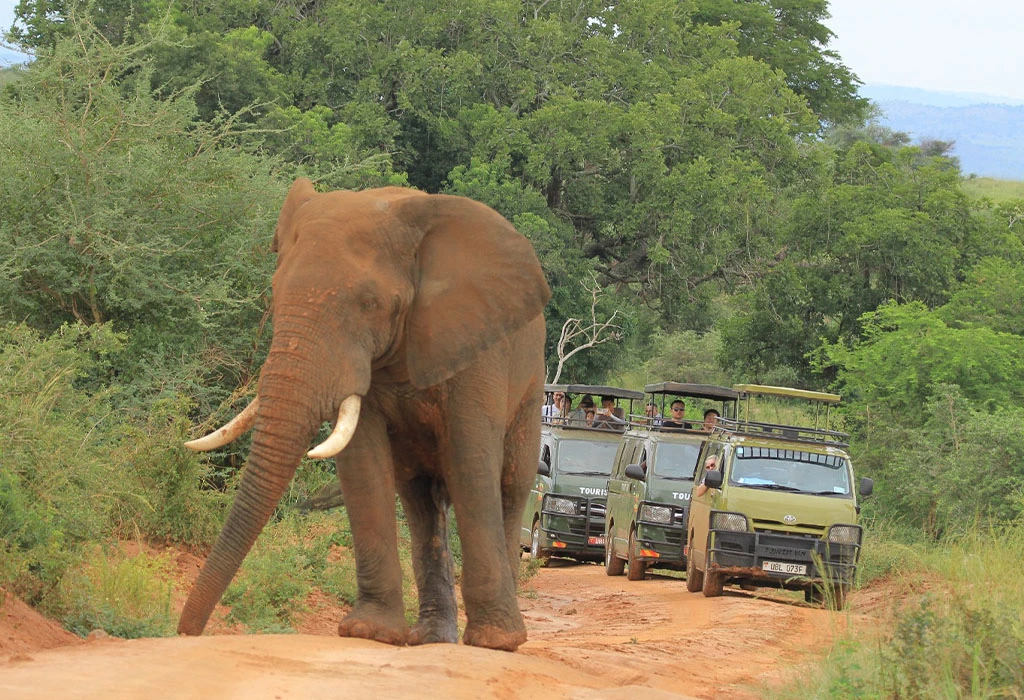
Queen Elizabeth National Park is one of Uganda’s most rewarding destinations for wildlife viewing, and elephants are among the animals that make a safari here so special. The park’s African bush elephants, scientifically known as Loxodonta africana, move across its savannah plains, woodlands, wetlands and lakeshores while displaying fascinating social and feeding behaviours.
Watching elephants in their natural environment offers more than a chance to take photographs. Their behaviour reveals how intelligent, social and adaptable these enormous mammals are. From the way a matriarch leads her family to the gentle care given to young calves, every interaction tells a story about life in the wild.
For visitors travelling with Gorilla Vista Safaris, understanding elephant behaviour can make a game drive through Queen Elizabeth National Park even more rewarding.
The Elephant Population in Queen Elizabeth National Park
African elephants are the largest land mammals in the world. Queen Elizabeth National Park supports a significant elephant population, although these animals have faced serious challenges over the years. During the 1970s and 1980s, poaching caused heavy losses across Uganda, including in some of the country’s protected areas.
Fortunately, stronger conservation measures have helped elephant numbers recover over time. Today, visitors can encounter elephants in several parts of Queen Elizabeth National Park, including the Kasenyi Plains, Mweya Peninsula and Ishasha sector. Elephants can also be seen around the Kazinga Channel, particularly when they move toward water during dry periods.
Their movements do not always stop at the park boundary. Elephants may travel between protected areas and surrounding habitats in search of food, water and suitable places to live. This makes cooperation between conservation authorities and local communities especially important.
A Matriarch Leads the Family Herd
Elephant societies have a strong family structure, and female elephants usually form the heart of the herd. A family group consists mainly of related females and their young.
The oldest female, known as the matriarch, normally leads the group. Her experience can prove extremely valuable because she remembers feeding areas, water sources, seasonal routes and places where the herd can find safety.
Herd sizes vary depending on the season, food availability and local conditions. A family group may contain several elephants or grow considerably larger when different family groups come together.
Young elephants remain close to their mothers and other females. The entire herd plays a role in protecting and guiding calves, creating a strong social bond within the family.
As male elephants mature, they eventually leave their natal herds, usually during adolescence. Adult bulls may live alone or form loose bachelor groups. They still interact with female herds, particularly when breeding opportunities arise.
How Elephants Communicate
Elephants have an impressive communication system. They use sounds, body movements, touch and chemical signals to communicate with one another.
Some of their calls are too low for humans to hear clearly. These low-frequency sounds, often referred to as infrasound, can travel long distances and allow elephants to communicate even when members of a group are separated.
Their body language is equally important. An elephant may spread its ears, raise its head, swing its trunk or change its posture to communicate excitement, fear, aggression or curiosity.
Touch also plays an important role. Elephants frequently use their trunks to touch one another, particularly when greeting, comforting or reassuring members of their family. Calves often stay close to their mothers and other females, gaining security through physical contact.
Feeding and Daily Activities
Elephants spend a large part of the day feeding because their enormous bodies require a tremendous amount of food. An adult elephant can consume well over 100 kilograms of vegetation in a day, depending on its size and the availability of food.
They are generalist feeders and eat a wide range of vegetation. Their diet includes grasses, leaves, branches, bark, roots, shrubs and fruits.
During the rainy season, fresh grasses may provide an abundant food source across the park’s open plains. When conditions become drier, elephants may rely more heavily on woody vegetation. Visitors may see them stripping bark from trees, breaking branches or using their trunks and tusks to investigate the ground for roots and other sources of food.
Their feeding habits have a major influence on the landscape. As elephants knock down trees, open pathways and spread seeds through their dung, they create opportunities for other plants and animals to thrive.
For this reason, elephants are often described as ecosystem engineers.
Seasonal Movement Around the Park
Elephants are constantly on the move. Their movements usually follow the availability of food, water and safe resting areas.
During the dry season, herds often move toward permanent water sources. The Kazinga Channel and the shores of Lakes Edward and George can become important places for elephants seeking water and cooling opportunities.
When rainfall returns, food becomes more widely available, allowing elephants to spread across the grasslands and woodland areas.
Many elephant movements follow traditional routes that have been used by generations of animals. Experienced matriarchs can remember these routes and guide their families between different parts of their home range.
This ability to remember landscapes is one of the reasons elephant societies are so fascinating to observe.
Caring for Young Calves
Elephant calves depend heavily on their mothers and other members of the herd during their early years. A female elephant has a long gestation period of about 22 months, after which she normally gives birth to a single calf.
The calf receives protection, nourishment and guidance from its mother and other females. Young elephants learn where to feed, how to approach water and how to respond to potential danger by observing older members of the herd.
Other females may assist with caring for a calf, a behaviour known as allomothering. This shared care strengthens the family unit and improves the calf’s chances of surviving in a challenging environment.
The strong bond between mothers and calves is often one of the most memorable sights during an elephant encounter in Queen Elizabeth National Park.
Breeding and the Behaviour of Bull Elephants
Adult male elephants behave differently from females that remain in family groups. Mature bulls generally spend much of their time alone or with other males.
One of the most notable behaviours in adult bulls is musth, a periodic condition associated with increased testosterone levels and reproductive activity. During musth, a bull may become more active, competitive and aggressive as it searches for breeding opportunities.
For this reason, visitors should always maintain a safe distance from elephants and follow the instructions of their safari guide. Even an elephant that appears calm can react quickly when it feels threatened.
How Elephants Defend Themselves
Despite their size and strength, elephants generally prefer to avoid unnecessary conflict. However, they can become highly defensive when they feel that their family or young are in danger.
When threatened, elephants may flap their ears, trumpet loudly, raise their trunks, kick up dust or make a mock charge. A herd protecting calves may gather closely around the young animals while adults face outward toward the perceived threat.
During a game drive, a guide can usually interpret these signals and determine when a vehicle needs to move farther away. Visitors should never attempt to approach, feed or provoke elephants.
Respecting their space protects both wildlife and people.
Why Elephants Matter to the Ecosystem
Elephants play an important role in maintaining the ecological balance of Queen Elizabeth National Park. Their feeding and movement patterns constantly reshape parts of the landscape.
When elephants break branches or push down trees, they can create open areas where grasses and other plants grow. Their dung also carries seeds across considerable distances, helping plants spread to new locations.
Their activities can therefore influence food and shelter for insects, birds, antelopes and other wildlife.
However, their ecological influence must remain balanced. Changes in habitat, elephant numbers and access to food and water can affect vegetation and other species within the ecosystem.
Conservation Challenges
Although Queen Elizabeth National Park provides elephants with important protection, conservation challenges remain. Human-wildlife conflict can occur when elephants move outside protected areas and enter farmland. Habitat loss and fragmentation can also restrict traditional movement routes.
Uganda’s wildlife authorities, conservation organisations and local communities continue to work toward reducing these challenges through wildlife protection, community education, habitat management and measures designed to reduce human-wildlife conflict.
Responsible tourism also contributes to conservation. Safari visits generate revenue and create employment while increasing awareness of the importance of protecting Uganda’s wildlife.
Experience Elephants on Safari
An elephant encounter in Queen Elizabeth National Park can be one of the highlights of a Uganda safari. However, the real fascination lies not only in seeing these huge animals but also in watching how they interact with one another and respond to their surroundings.
You may see a matriarch leading her family across the savannah, calves playing beside their mothers, bulls moving independently or a herd gathering beside the Kazinga Channel for water.
With Gorilla Vista Safaris, visitors can explore Queen Elizabeth National Park with an appreciation of the behaviour that makes its elephants so remarkable. Responsible viewing allows travellers to enjoy these animals while giving them the space and respect they need.
Conclusion
Elephants are an essential part of Queen Elizabeth National Park’s wildlife and natural heritage. Their complex family relationships, communication, feeding habits, seasonal movements and protective behaviour demonstrate remarkable intelligence and adaptability.
At the same time, their role extends beyond their own survival. By spreading seeds, modifying vegetation and creating pathways through the landscape, elephants help shape habitats used by many other species.
Protecting them therefore means protecting much more than a single iconic animal. It means safeguarding an important part of the wider ecosystem for future generations. As conservation efforts continue, responsible tourism and cooperation with local communities will remain essential to ensuring that elephants continue to roam the landscapes of Queen Elizabeth National Park.






2 Comments
[…] tree-climbing lions remain one of the most intriguing sights in Queen Elizabeth National Park. Watching a powerful lion resting quietly on a high branch challenges the usual image of a predator […]
[…] way to experience Africa’s wildlife through your camera lens. From the lion-filled plains of Queen Elizabeth National Park to the leopard habitats of Murchison Falls National Park, Uganda provides diverse settings for […]