- DIRECT CONTACTS:
- +256 779 116 947
- +256 758 566 300
- info@gorillavistasafaris.com

Sempaya Hot Springs in Semuliki National Park
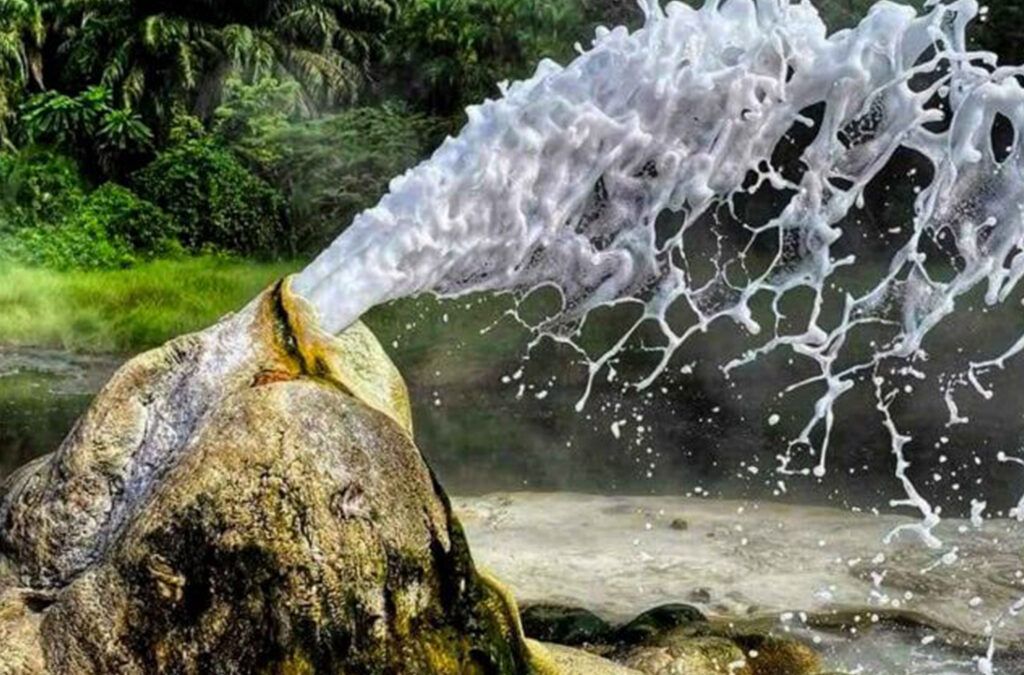
The Sempaya Hot Springs in Semuliki National Park rank among Uganda’s most remarkable natural attractions. Located deep within a lush lowland rainforest in western Uganda, these geothermal springs offer visitors a rare opportunity to witness the powerful forces beneath the Earth’s surface. From boiling water and rising clouds of steam to fascinating cultural traditions, the springs provide an unforgettable experience for nature lovers, photographers, and cultural explorers.
Beyond their natural beauty, the Sempaya Hot Springs hold deep spiritual and cultural significance for the indigenous Bamaga people. Visitors can explore the surrounding forest, learn about local legends, and watch as residents and guides demonstrate how geothermal heat can cook food. Whether you are planning a wildlife safari or exploring western Uganda’s hidden gems, a visit to Sempaya offers a memorable combination of nature, science, and cultural discovery.
Understanding Semuliki National Park
Before visiting the Sempaya Hot Springs, it helps to understand the unique environment that surrounds them. Semuliki National Park protects approximately 220 square kilometres of lowland tropical rainforest in western Uganda. Unlike many other Ugandan forests, which grow at higher elevations, Semuliki preserves a lowland rainforest ecosystem at approximately 670–760 metres above sea level.
Furthermore, the park forms the easternmost extension of the vast Ituri Forest of the Congo Basin. This connection gives Semuliki a distinctive Central African character, reflected in its vegetation, birdlife, and wildlife. As a result, visitors can encounter species that are uncommon in other parts of East Africa.
The park also lies within the Albertine Rift, an active geological region associated with the western branch of the Great Rift Valley. Tectonic activity and underground geothermal heat contribute to the formation of the Sempaya Hot Springs, where heated groundwater rises through fractures in the Earth’s crust.
In addition to these geothermal attractions, Semuliki supports a remarkable variety of birds, mammals, primates, and plant species. Consequently, visitors can enjoy much more than a quick stop at the springs. The surrounding rainforest offers an excellent opportunity to discover Uganda’s biodiversity through guided nature walks and wildlife observation.
Exploring the Sempaya Hot Springs
The Sempaya Hot Springs consist of two principal geothermal features: Nyasimbi, commonly known as the female hot spring, and Bitente, known as the male hot spring. Although they lie approximately one kilometre apart, each has distinctive characteristics that make the visit worthwhile.
Exploring both springs allows visitors to appreciate the area’s geological activity while learning about the cultural traditions associated with these extraordinary natural features.
Nyasimbi: The Female Hot Spring
Nyasimbi is the larger and more dramatic of the two Sempaya Hot Springs. The boiling pool measures approximately 12 metres across, and its water can reach temperatures of about 103°C. These temperatures make the spring extremely dangerous to approach outside designated viewing areas.
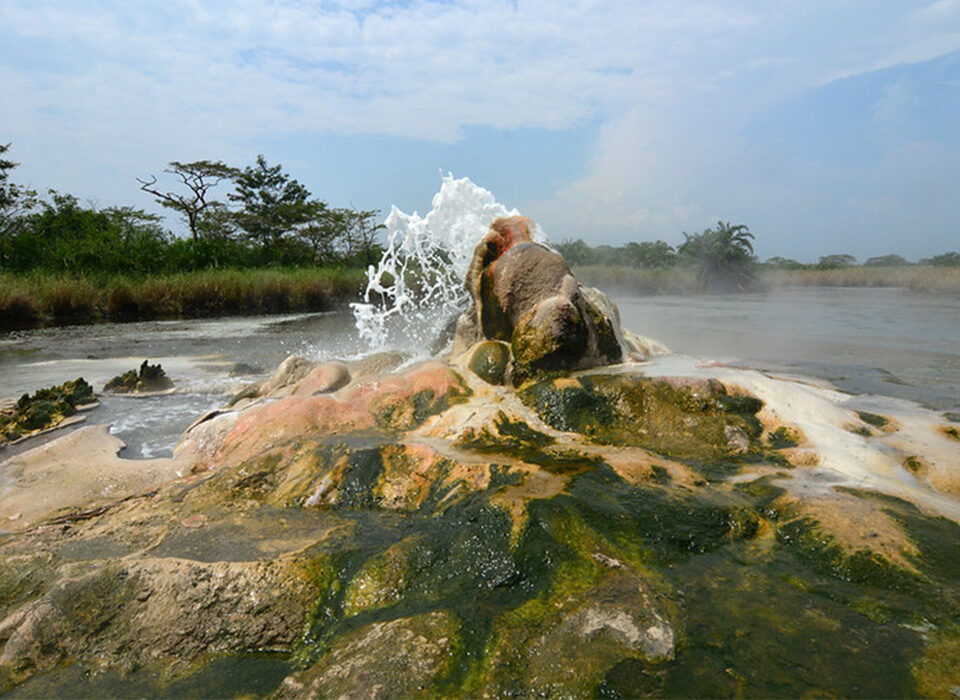
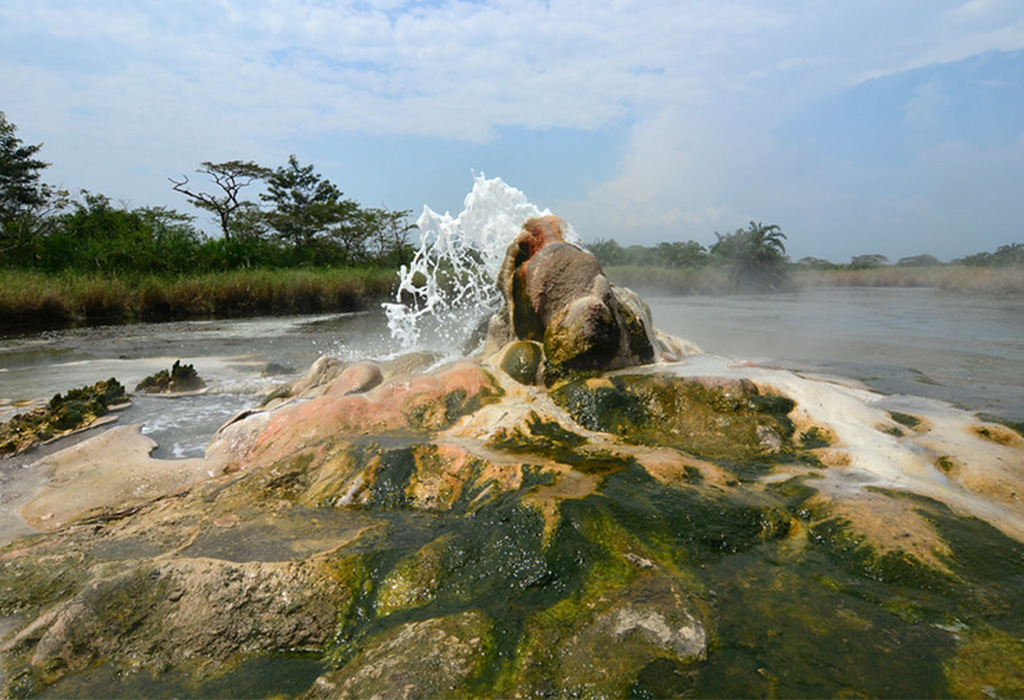
Water continuously bubbles and surges from underground, producing thick clouds of steam that rise above the surrounding vegetation. Meanwhile, mineral deposits create pale patches on the ground, contrasting beautifully with the dense green rainforest.
The sight of boiling water emerging naturally from the Earth offers a fascinating introduction to geothermal activity. With guidance from knowledgeable park staff, visitors can learn how underground heat, groundwater, and geological fractures combine to produce this spectacular phenomenon.
How Geothermal Activity Creates the Hot Springs
The Sempaya Hot Springs developed through the interaction of groundwater and geothermal heat. Rainwater gradually seeps into the ground through cracks and fractures in the rocks. As it moves deeper underground, it encounters heated rocks associated with the region’s geological activity.
The water then rises towards the surface through underground channels and fractures. When it reaches the surface, it produces the bubbling, steaming pools that make Sempaya one of Uganda’s most distinctive natural attractions.
This process demonstrates the powerful geological forces operating beneath the Albertine Rift. Therefore, a visit to the springs provides an educational experience for travelers interested in geology, environmental science, and the natural history of Uganda.
One of the most memorable experiences at the Sempaya Hot Springs is watching food cook using natural geothermal heat. Visitors may see demonstrations involving eggs, green bananas, locally known as matoke, and other suitable foods placed in the hot water using appropriate equipment.
Cooking Food Using Natural Geothermal Heat
Within a short time, the geothermal heat cooks the food, demonstrating a practical use of the springs’ extraordinary temperatures. The experience also creates an opportunity to learn about the relationship between local communities and their natural environment.
However, visitors should never place their hands or feet in the water or attempt to cook food independently. The springs can cause severe burns, so all demonstrations should take place under appropriate local guidance and from designated safe areas.
Bitente: The Male Hot Spring
In contrast to Nyasimbi, Bitente presents a quieter but equally interesting geothermal landscape. Located along the forest trail connecting the two springs, this feature appears as a bubbling pool surrounded by muddy ground and rising steam.
Temperatures are commonly reported at approximately 95–100°C, although conditions can vary. Despite its different appearance, Bitente demonstrates the same underlying interaction between underground heat and groundwater.
The walk between Bitente and Nyasimbi adds another dimension to the experience. Along the trail, visitors can observe forest vegetation, listen to bird calls, and look for primates and other wildlife. Consequently, the journey between the springs becomes an important part of exploring Semuliki National Park.
Cultural Significance of the Sempaya Hot Springs
The Sempaya Hot Springs are more than geological attractions. For the indigenous Bamaga community, they hold cultural and spiritual importance, connecting local traditions with the landscape and the stories passed down through generations.
Learning about these traditions gives visitors a deeper understanding of the relationship between people and nature in western Uganda. Local cultural guides can explain the significance of the springs while helping travellers appreciate the area’s heritage respectfully.
The Legend of Bitente and Nyasimbi
According to a traditional Bamaga oral legend, Bitente was a hunter who disappeared in the forest. His wife, Nyasimbi, went searching for him after he failed to return home. In the story, both disappeared mysteriously, and the springs later emerged at the places associated with their disappearance.
The legend explains why the two geothermal features carry human names and are identified as male and female springs. It also reflects the spiritual meanings that local communities attach to significant natural landmarks.
Listening to this story while exploring the springs adds cultural depth to the visit. Rather than seeing the bubbling pools only as geological formations, visitors gain insight into the traditions and beliefs that have shaped the community’s connection with the area.
Traditional Beliefs and Cultural Practices
Historically, members of the Bamaga community performed rituals and offered sacrifices at the springs to seek blessings, protection, health, and fertility. These practices formed part of a broader cultural relationship with the natural environment.
Some traditional beliefs and healing practices continue to influence local perspectives on the springs. However, customs may differ among individuals and families, so visitors should allow local community members to explain their traditions in their own words.
When participating in cultural visits, travellers should follow their guides’ instructions, ask permission before taking photographs of people, and respect any areas where access is restricted. In this way, tourism can support cultural appreciation while helping preserve local heritage.
Where Are the Sempaya Hot Springs Located?
The Sempaya Hot Springs lie inside Semuliki National Park in western Uganda, near the border with the Democratic Republic of the Congo. The area sits within the Albertine Rift, where dramatic landscapes, tropical forests, and mountain views create an appealing destination for travellers.
The nearest major tourism hub is Fort Portal, a town known for its crater lakes, green hills, and access to several national parks. From Fort Portal, visitors can travel towards Bundibugyo along a scenic road that passes rural settlements, tea plantations, and spectacular landscapes.
How to Get to the Sempaya Hot Springs
The journey from Fort Portal to the Sempaya Hot Springs generally takes around 1.5–2 hours by road, depending on traffic, weather, road conditions, and the exact starting point. The route offers beautiful views of western Uganda’s countryside and, in suitable weather, the surrounding mountain scenery.
Travellers can reach the area using a private vehicle, a hired driver, or an organised safari. Arranging transport in advance is particularly helpful for visitors planning to combine the springs with other attractions in Semuliki National Park.
Before departure, confirm the current park entrance arrangements, road conditions, opening hours, and any applicable fees with the Uganda Wildlife Authority or an authorised local operator.
Semuliki National Park Entrance Fees
Park entrance fees may vary according to visitor residency status, nationality, activity, and the applicable tariff. Travellers should therefore confirm the current rates before visiting rather than relying on older published prices.
When planning your budget, remember to account for possible additional costs, including transport, guiding services, accommodation, meals, and any other activities you intend to enjoy. Checking these details in advance helps you organise a smoother visit to the Sempaya Hot Springs.
Best Things to Do at the Sempaya Hot Springs
Although the hot springs are the main attraction, the surrounding rainforest offers several other activities that can make your visit more rewarding.
1. Enjoy a Guided Rainforest Walk
Walking through the forest is one of the best ways to experience Semuliki National Park. Along the trails, knowledgeable guides explain the rainforest ecosystem, identify interesting plants, and point out signs of wildlife that visitors might otherwise overlook.
Depending on conditions and luck, you may spot black-and-white colobus monkeys, red-tailed monkeys, olive baboons, and a variety of forest birds. The walk also allows you to appreciate the sounds, vegetation, and atmosphere of one of Uganda’s distinctive lowland rainforest environments.
2. Photograph the Hot Springs and Rainforest
The contrast between steaming water, bubbling pools, mineral deposits, and dense green vegetation creates excellent photographic opportunities. The changing light can produce particularly atmospheric scenes, especially when mist hangs above the forest.
Morning visits may offer attractive lighting, although weather conditions vary throughout the year. Visitors should protect their cameras and phones from moisture and keep a safe distance from the hot water while taking photographs.
3. Discover Semuliki’s Birdlife
Semuliki National Park is an excellent destination for birdwatching because its Congo Basin connections support many Central African forest species. Birdwatchers may look for impressive species such as the black-casqued wattled hornbill and the great blue turaco, alongside various barbets, greenbuls, and other forest birds.
A knowledgeable guide can help identify birds by their calls, colours, and behaviour. Even visitors without specialist birdwatching equipment can enjoy learning about the diversity of the park’s avian life.
For serious birdwatchers, spending additional time in the forest can improve the chances of finding less commonly observed species.
4. Learn About Local Culture
A visit to the hot springs offers an opportunity to learn about Bamaga traditions, oral history, and the cultural significance of the surrounding landscape. Depending on availability, visitors may arrange a community visit or a cultural experience led by local participants.
These encounters provide a broader understanding of the area beyond its natural attractions. They can also create opportunities for local people to share their knowledge and benefit from responsible tourism.
Other Activities in Semuliki National Park
Travellers who have additional time can combine the Sempaya Hot Springs with other experiences in the park. These activities provide different perspectives on the region’s wildlife, vegetation, and cultural heritage.
- Sempaya Nature Trail: Explore the forest on a guided walk to the geothermal springs and learn about the area’s natural features.
- Kirumia Trail: Experience a longer rainforest walk through a habitat known for its rich birdlife. Check current trail conditions and expected walking times before setting out.
- Birdwatching excursions: Spend additional time searching for Central African forest species with an experienced guide.
- Night walks, where permitted: Discover nocturnal forest life through an authorised activity, following park regulations and guide instructions.
- Community and cultural experiences: Learn about local traditions and the relationship between surrounding communities and the natural environment.
Activity availability, trail access, and duration can change with weather and park conditions. Confirm arrangements before travelling, particularly if you plan to include several activities in one day.
Combining the Sempaya Hot Springs With Other Uganda Destinations
The Sempaya Hot Springs fit naturally into a wider western Uganda safari. Their location makes it possible to combine rainforest exploration with chimpanzee trekking, savannah wildlife viewing, mountain adventures, and scenic landscapes.
Kibale Forest National Park
Kibale Forest National Park is renowned for chimpanzee trekking and its remarkable diversity of primates. Combining Kibale with Semuliki allows visitors to experience two distinct forest environments while learning about Uganda’s wildlife and conservation efforts.
Queen Elizabeth National Park
Queen Elizabeth National Park offers classic African safari experiences, including game drives and boat trips along the Kazinga Channel. Adding this destination to your itinerary creates a varied journey that combines rainforest scenery with savannah wildlife.
Rwenzori Mountains
The Rwenzori Mountains provide dramatic scenery, forested foothills, and opportunities for hiking and mountain exploration. Travellers can combine the region’s landscapes with a visit to the hot springs for a broader western Uganda adventure.
Fort Portal and the Crater Lakes
Fort Portal is an excellent base for exploring crater lakes, rolling green hills, and nearby cultural attractions. Visitors can enjoy scenic drives, relaxed walks, and beautiful viewpoints before or after travelling to Semuliki National Park.
Best Time to Visit the Sempaya Hot Springs
The Sempaya Hot Springs can be visited throughout the year, but weather conditions can influence the quality of your experience. Drier periods generally make forest trails and road travel easier, while wetter months bring lush vegetation and a particularly vibrant rainforest atmosphere.
Rain can make some paths muddy and slippery, so comfortable walking shoes with good grip are recommended. Lightweight clothing, drinking water, insect repellent, and protection for electronic equipment can also make the visit more comfortable.
Regardless of the season, start early if you want to explore both springs and enjoy additional nature activities. Allow enough time for the guided walk, photography, and cultural explanations rather than rushing through the experience.
Practical Tips for Visiting the Sempaya Hot Springs
A little preparation can make your visit safer, more comfortable, and more rewarding. Keep the following recommendations in mind when planning your trip:
- Hire an authorised guide: A knowledgeable guide can explain the springs’ geology, identify wildlife, and provide cultural context.
- Wear suitable footwear: Choose comfortable shoes with good traction for potentially muddy or uneven forest trails.
- Keep a safe distance: The geothermal pools are dangerously hot. Never enter the water, touch it, or cross safety barriers.
- Carry drinking water: Walking in a humid tropical environment can be tiring, so remember to stay hydrated.
- Bring a camera: Capture the scenery while protecting your equipment from steam and moisture.
- Respect local traditions: Listen to community guides and ask permission before photographing people or cultural activities.
- Confirm fees and transport: Check current entrance charges, road conditions, guiding arrangements, and activity availability before travelling.
- Allow sufficient time: Exploring both springs and enjoying the surrounding rainforest is more rewarding when you are not in a hurry.
These simple preparations help you enjoy the Sempaya Hot Springs while respecting both the natural environment and the communities connected to it.
Conclusion: Discover the Sempaya Hot Springs in Uganda
The Sempaya Hot Springs in Semuliki National Park offer a remarkable combination of geothermal activity, tropical rainforest, wildlife, and cultural heritage. From watching water boil naturally above underground heat to learning the Bamaga legends associated with Nyasimbi and Bitente, visitors can discover a side of Uganda that differs from the country’s more familiar savannah safaris.
Moreover, the surrounding forest provides opportunities for birdwatching, primate observation, photography, and guided nature walks. When combined with destinations such as Kibale Forest, Queen Elizabeth National Park, the Rwenzori Mountains, and Fort Portal’s crater lakes, the springs become an excellent addition to a western Uganda itinerary.
Whether you are a nature enthusiast, a photographer, or a traveller interested in local traditions, the Sempaya Hot Springs offer an experience worth including in your Uganda travel plans. With thoughtful preparation, respect for local culture, and attention to safety, you can explore this extraordinary destination and appreciate the natural forces that make it so special.