- DIRECT CONTACTS:
- +256 779 116 947
- +256 758 566 300
- info@gorillavistasafaris.com

The Challenges of Gorilla Trekking During the Rainy Season
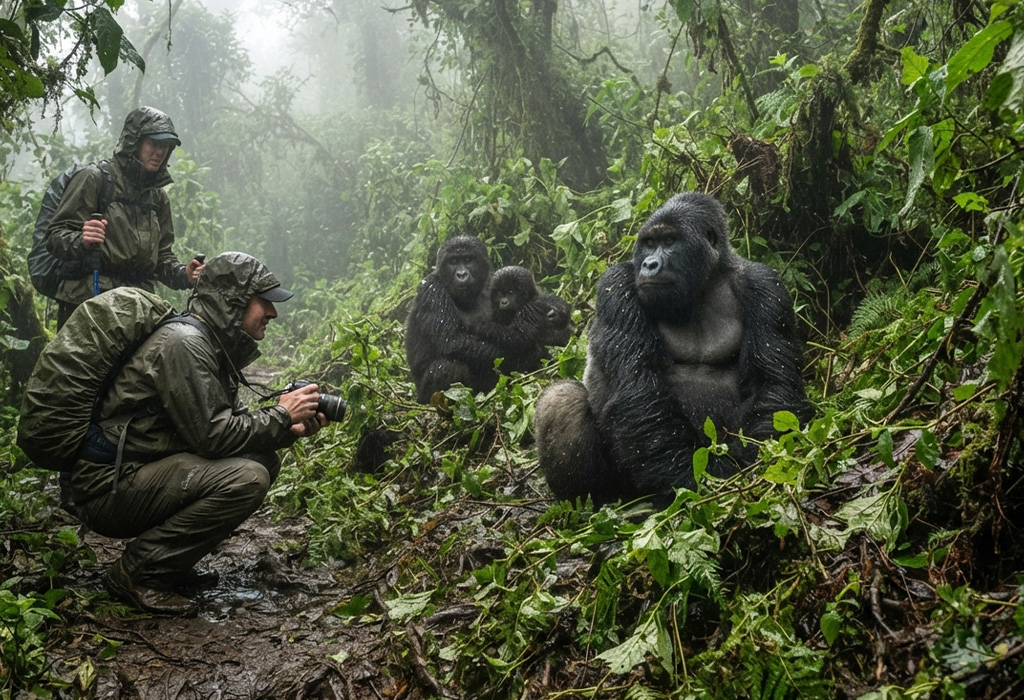
Gorilla trekking during the rainy season offers an unforgettable wildlife experience, but it also presents challenges that every traveler should understand before setting out. The lush rainforests of Uganda and Rwanda become greener, the mountain air feels fresher, and the forest comes alive with the sounds of birds and other wildlife. However, frequent rainfall can make hiking trails slippery, reduce visibility, and turn an already demanding trek into a physically challenging adventure.
Despite these difficulties, many travelers choose to visit the mountain gorillas during the rainy months because they can enjoy beautiful scenery, fewer visitors in some areas, and potentially greater flexibility when booking their trips. With the right equipment, proper preparation, and experienced guides, you can still enjoy an incredible encounter with mountain gorillas in their natural habitat.
Whether you plan to explore Bwindi Impenetrable National Park in Uganda or Volcanoes National Park in Rwanda, understanding the challenges of gorilla trekking during the rainy season will help you prepare for a safer and more comfortable journey.
Understanding the Gorilla Trekking Experience
Gorilla trekking involves hiking through dense tropical forests and mountainous terrain to find habituated mountain gorilla families. Accompanied by trained park guides and trackers, visitors follow established routes and forest trails until they locate a gorilla group.
The experience takes place in several protected areas across East and Central Africa, including Uganda’s Bwindi Impenetrable National Park and Mgahinga Gorilla National Park, as well as Rwanda’s Volcanoes National Park. Trekking also takes place in the Democratic Republic of Congo, depending on park access and prevailing security conditions.
However, finding mountain gorillas in their natural habitat requires patience because they move through the forest to feed, rest, and interact with other family members. Some treks last less than an hour, while others require several hours of hiking through steep, densely vegetated terrain.
During the rainy season, these conditions become more demanding. Trails that seem manageable in dry weather can quickly become muddy, while thick vegetation and mist may make navigation and photography more difficult. Therefore, travelers should prepare for changing conditions rather than assume that every trek will follow the same pattern.
When Is the Rainy Season for Gorilla Trekking?
The rainy season in Uganda and Rwanda generally occurs during two main periods, although the timing and intensity of rainfall vary from year to year.
The first rainy season usually falls between March and May, while the second commonly occurs from October to November. However, mountain rainforests can experience rainfall outside these periods, so visitors should prepare for wet conditions throughout the year.
In Uganda, Bwindi Impenetrable National Park receives substantial rainfall because of its mountainous terrain and dense tropical forest. Similarly, Volcanoes National Park in Rwanda experiences changing weather conditions due to its high elevation and volcanic landscape.
The dry seasons, generally from June to September and December to February, often provide more favorable hiking conditions. Nevertheless, gorilla trekking operates throughout the year when park authorities permit access.
Important: The rainy season does not automatically mean that gorilla trekking will be unavailable. Instead, weather conditions may influence trail difficulty, travel times, and the equipment you need.
Top Challenges of Gorilla Trekking During the Rainy Season
Gorilla trekking during the rainy season can be rewarding, but the weather introduces several practical challenges. Understanding these difficulties beforehand helps you plan appropriately and enjoy the experience with greater confidence.
1. Muddy and Slippery Hiking Trails
One of the biggest challenges of rainy season gorilla trekking is navigating muddy forest trails. Frequent rainfall softens the soil, creating slippery surfaces that make walking more difficult, especially on steep sections.
In Bwindi Impenetrable National Park, for example, visitors may encounter narrow paths that cross muddy slopes, exposed tree roots, and uneven ground. These conditions require careful footing and a slower walking pace.
Furthermore, the mud can make the trek more physically demanding because you must constantly adjust your balance while moving through the forest. Even experienced hikers may find that wet conditions increase fatigue.
To prepare for muddy trails, consider bringing:
- Waterproof hiking boots with strong ankle support and good traction.
- Hiking gaiters to prevent mud and water from entering your boots.
- Trekking poles, if permitted and appropriate for the route.
- Comfortable hiking socks and an extra pair for after the trek.
Most importantly, avoid rushing. Follow your guide’s instructions, take your time on steep sections, and ask for assistance when you encounter difficult terrain.
2. Slippery Slopes and Steep Terrain
Mountain gorilla habitats often include steep hillsides, valleys, and uneven forest floors. During the rainy season, these landscapes become more challenging because wet soil, fallen leaves, and exposed roots reduce traction.
This difficulty is particularly noticeable in mountainous areas of Bwindi and Volcanoes National Park. Depending on the gorilla family’s location, you may need to climb uphill, descend steep slopes, or cross sections where the ground remains wet throughout the day.
Consequently, travelers should expect the trek to require more concentration and physical effort than it might during a dry spell.
To manage these conditions, maintain a steady pace and use available handholds only when your guide considers them safe. Avoid stepping on loose branches or unstable vegetation, and allow other trekkers enough space when moving along narrow paths.
A useful tip: You do not need to be an elite athlete to participate in gorilla trekking. However, a reasonable level of fitness, suitable footwear, and a willingness to move slowly can make the experience considerably more manageable.
3. Dense Vegetation and Difficult Navigation
Rainfall encourages vegetation to flourish, giving tropical forests their characteristic green appearance. While this creates beautiful scenery, thick undergrowth can make gorilla trekking more complicated.
Tall grasses, leafy plants, tangled vines, and wet branches may obstruct narrow trails. In some areas, guides and trackers must help the group navigate around vegetation or identify the safest route through the forest.
Additionally, wet plants can brush against your clothing, leaving you damp even when rainfall has stopped. Visitors may also encounter muddy branches and leaves that make walking less comfortable.
Fortunately, experienced guides and trackers understand the forest environment and know how to navigate changing trail conditions. They also communicate with one another to help locate gorilla families.
For a more comfortable trek, wear long-sleeved shirts and long trousers made from suitable outdoor fabrics. These provide protection against scratches, insects, and wet vegetation.
Always follow your guide’s directions instead of attempting to find a shortcut. Staying with the group helps protect both visitors and the wildlife they have come to observe.
4. Poor Visibility and Photography Challenges
Another challenge of gorilla trekking during the rainy season is unpredictable visibility. Mist, fog, cloud cover, and rainfall can affect the amount of natural light reaching the forest floor.
These conditions can make it difficult to photograph mountain gorillas, particularly beneath thick forest canopies. Water droplets may also collect on camera lenses, while damp conditions increase the risk of equipment damage.
Nevertheless, rainy weather can create wonderful photographic opportunities. The forest often appears richly green, and soft natural light can produce beautiful wildlife images when conditions are suitable.
To improve your photography experience, consider these practical measures:
- Carry a waterproof camera cover or protective dry bag.
- Use a microfiber cloth to clean moisture from your lens.
- Keep spare batteries and memory cards in a waterproof pouch.
- Choose camera settings suitable for low-light environments.
- Avoid changing lenses in heavy rain whenever possible.
Most importantly, remember that photography should not distract you from following park regulations or respecting the gorillas’ space.
A successful encounter is about more than taking perfect pictures. Observing gorilla behavior, listening to the forest, and appreciating these remarkable primates can make the experience memorable even when the weather is less than ideal.
5. Difficult Road Access and Travel Delays
Heavy rainfall can affect road conditions around gorilla trekking destinations. Rural access roads may become muddy, while poor drainage, erosion, or occasional landslides can delay journeys in mountainous areas.
These challenges may affect travelers driving to Bwindi Impenetrable National Park, particularly when their accommodation or trekking sector lies far from the main paved roads.
In addition, visitors who connect between airports, lodges, and national parks should allow sufficient time for unexpected delays. A journey that normally takes several hours may take longer when roads deteriorate after heavy rainfall.
To reduce the inconvenience, arrange transportation with an experienced local operator familiar with the destination and seasonal road conditions. Where possible, arrive at your lodge a day before your scheduled gorilla trek instead of traveling to the park on the same morning.
You should also confirm your meeting point and briefing time with the relevant park authorities or your tour operator before departure.
Although travelers cannot control the weather, careful planning can prevent unnecessary stress and reduce the risk of missing important arrangements.
6. Increased Insects and Health Considerations
Warm, humid conditions and standing water can encourage mosquito activity in some areas. Visitors should therefore take sensible precautions against mosquito bites and other insect-related discomfort.
Depending on the destination, mosquitoes may transmit diseases such as malaria. However, the level of risk varies by location and season, so travelers should seek destination-specific medical advice before their trip.
In addition to insects, prolonged exposure to rain and damp clothing can make the trek uncomfortable. Staying warm, carrying dry clothing for afterward, and protecting yourself from the elements can help improve your overall experience.
Before traveling, consider the following precautions:
- Use an appropriate insect repellent according to its label.
- Wear long trousers and long-sleeved clothing.
- Consult a qualified travel health professional about malaria prevention and recommended vaccinations.
- Carry any prescribed medication you may need during the trip.
- Inform your guide if you feel unwell during the trek.
Travelers should also follow park health requirements. Because mountain gorillas are vulnerable to some human respiratory infections, anyone who feels ill should notify park staff and follow their instructions.
Good preparation helps protect both visitors and the endangered gorillas they have come to see.
Benefits of Gorilla Trekking During the Rainy Season
Although wet weather presents challenges, it also offers several advantages. For travelers who prepare properly, the rainy season can provide a different perspective on the rainforest and its wildlife.
1. Fewer Visitors in Some Periods
Some travelers prefer the drier months because hiking conditions are often easier. As a result, certain rainy-season periods may attract fewer visitors.
This can make the overall travel experience feel quieter, particularly at lodges and other visitor facilities. However, the number of trekkers depends on the destination, available permits, travel dates, and demand.
Gorilla trekking remains a regulated activity, so visitors should not assume that rainy-season treks will always be uncrowded.
Nevertheless, if you prefer traveling outside the busiest periods, it may be worth considering dates during the wetter months.
2. Potentially Greater Booking Flexibility
Travel demand often changes throughout the year, which can affect accommodation availability and the ease of arranging a safari.
During some low-demand periods, travelers may find more flexibility when choosing lodges or organizing their itineraries. Certain accommodation providers and tour operators may also offer seasonal promotions.
However, gorilla trekking permits are not automatically discounted during the rainy season. Permit prices and availability depend on the relevant wildlife authority and its current policies.
Because permits are limited, it is still advisable to book in advance, especially if you have specific travel dates or want to trek in a particular sector.
Comparing accommodation options and confirming permit arrangements early can help you plan a safari that suits your schedule and budget.
3. Beautiful Green Scenery and Lush Rainforests
Rain transforms gorilla trekking destinations into vibrant landscapes filled with fresh foliage, moss-covered trees, and rich shades of green.
In Bwindi Impenetrable National Park, the forest’s dense vegetation creates a striking setting for wildlife encounters. Similarly, the volcanic slopes of Volcanoes National Park can look particularly dramatic when clouds drift across the mountains.
For nature lovers, these conditions offer excellent opportunities to appreciate the rainforest ecosystem.
Birdwatchers may also enjoy observing forest birds in their natural surroundings, although visibility and bird activity vary with the weather.
The lush scenery can make the journey especially appealing to travelers who enjoy photography, nature walks, and immersive outdoor experiences.
4. Opportunities to Observe Natural Gorilla Behavior
Mountain gorillas continue their daily activities throughout the year, including feeding, resting, grooming, and caring for their young.
Rainy weather does not guarantee that gorillas will be easier to find or that their behavior will change in predictable ways. Their movements depend on several factors, including food availability, social behavior, and the location of their family group.
Nevertheless, visiting during the rainy season allows you to experience the forest under different environmental conditions.
When trackers locate a habituated gorilla family, visitors can observe the animals according to park rules, regardless of whether the surrounding forest is wet or dry.
The opportunity to see mountain gorillas in their natural habitat remains the central highlight of the experience.
How to Prepare for Gorilla Trekking During the Rainy Season
Proper preparation can make a significant difference to your comfort and enjoyment. Before traveling to Uganda or Rwanda, organize suitable clothing, check your fitness level, and review the arrangements for your trek.
1. Pack the Right Clothing and Equipment
Your clothing should protect you from rain, mud, insects, and changes in temperature. Because mountain forests can be cool and damp, especially at higher elevations, layering your clothing is often a practical choice.
Essential items include:
- Waterproof hiking boots with good grip.
- A lightweight waterproof jacket and rain trousers or poncho.
- Long-sleeved shirts and long hiking trousers.
- Gardening gloves or suitable hiking gloves for protection from vegetation.
- Gaiters to keep mud and debris out of your boots.
- A waterproof backpack cover or dry bags.
- Drinking water and suitable snacks, following your guide’s advice.
- A small towel and a change of clothes for afterward.
- Camera protection and spare batteries, if needed.
Pack thoughtfully rather than carrying unnecessary equipment. A lighter backpack can make a long trek more comfortable, especially when the ground is steep and slippery.
2. Improve Your Physical Fitness Before Traveling
Gorilla trekking can involve several hours of walking through uneven terrain. During the rainy season, muddy trails and slippery slopes may increase the effort required.
You can prepare by incorporating regular walks, gentle uphill hikes, and other suitable cardiovascular activities into your routine before traveling.
If possible, practice walking on uneven trails while wearing the footwear you intend to use during the trek. This helps you become familiar with your equipment before arriving at the park.
However, avoid assuming that every gorilla trek will be extremely difficult. The duration and intensity depend largely on where the gorilla family is located and the terrain along the route.
When making your booking, discuss any mobility concerns with your tour operator so they can explain the available arrangements. Some destinations may offer additional assistance, subject to park rules and availability.
3. Follow Health and Safety Recommendations
Before departure, consult a qualified healthcare professional or travel clinic about health precautions for Uganda or Rwanda.
Depending on your itinerary and medical history, you may need advice about vaccinations, malaria prevention, insect protection, and any personal medications.
You should also check current entry requirements and destination-specific health recommendations before traveling.
During the trek, follow your guide’s instructions, drink water regularly, and tell your guide if you feel unwell or struggle with the conditions.
Remember that responsible gorilla tourism protects the animals as well as visitors. Keep the required distance from the gorillas, avoid touching them, and follow all instructions concerning coughing, sneezing, and other potential sources of infection.
4. Choose Suitable Travel Insurance
Travel insurance is particularly important when visiting remote destinations where medical facilities may be far from your lodge or trekking location.
Before purchasing a policy, check whether it covers your planned activities, medical treatment, trip interruptions, and emergency evacuation where available.
You should also review exclusions and coverage limits carefully rather than assuming every policy provides the same protection.
If you are traveling during the rainy season, consider how weather-related road delays or transport disruptions could affect your itinerary.
Appropriate insurance cannot prevent unexpected problems, but it can provide valuable financial protection when covered incidents occur.
5. Allow Extra Time in Your Itinerary
Rainy-season travel requires flexibility because weather conditions can change quickly. Rather than scheduling every activity tightly, allow extra time for road journeys, lodge transfers, and other arrangements.
If possible, spend the night near your trekking location before the scheduled activity. This reduces the pressure of making a long journey on the morning of your trek.
You should also confirm your permit details, departure arrangements, and briefing time in advance.
Most importantly, remain flexible. A change in weather does not necessarily mean your experience will be disappointing. With a realistic schedule and the right expectations, you can focus on enjoying the forest and the wildlife.
Is Gorilla Trekking During the Rainy Season Worth It?
For many travelers, the answer is yes. Gorilla trekking during the rainy season can be an exceptional experience, provided you understand the conditions and prepare accordingly.
The wet months bring challenges such as muddy trails, slippery slopes, reduced visibility, and occasional travel delays. However, they also offer lush scenery and the opportunity to experience mountain gorilla habitats under different conditions.
The rainy season may suit adventurous travelers, wildlife enthusiasts, and photographers who appreciate the atmosphere of a tropical rainforest. It can also appeal to visitors whose schedules favor travel outside the main dry-season periods.
On the other hand, travelers who strongly prefer dry hiking trails or feel uncomfortable walking on slippery ground may find the drier months more suitable.
When deciding, consider your physical fitness, travel dates, budget, and tolerance for unpredictable weather. You should also remember that no season guarantees an easy trek, because gorilla movements and forest conditions can vary from day to day.
Ultimately, the best time to visit is the period that matches your priorities while allowing you to travel responsibly and comfortably.
Conclusion: Making the Most of Rainy-Season Gorilla Trekking
Gorilla trekking during the rainy season presents a unique combination of challenges and rewards. Muddy trails, slippery slopes, dense vegetation, and changing weather can make the adventure more demanding. Nevertheless, careful planning, appropriate equipment, and guidance from experienced trackers can help you navigate these conditions.
At the same time, the rainy months reveal the beauty of Uganda’s and Rwanda’s mountain forests, creating opportunities to appreciate their rich vegetation and remarkable wildlife.
Before setting out, prepare for wet conditions, review your health precautions, confirm your permits, and allow flexibility in your itinerary. Most importantly, follow park regulations and respect the gorillas’ natural behavior.