- DIRECT CONTACTS:
- +256 779 116 947
- +256 758 566 300
- info@gorillavistasafaris.com

What Is the Best Gorilla Family to See in Rwanda?
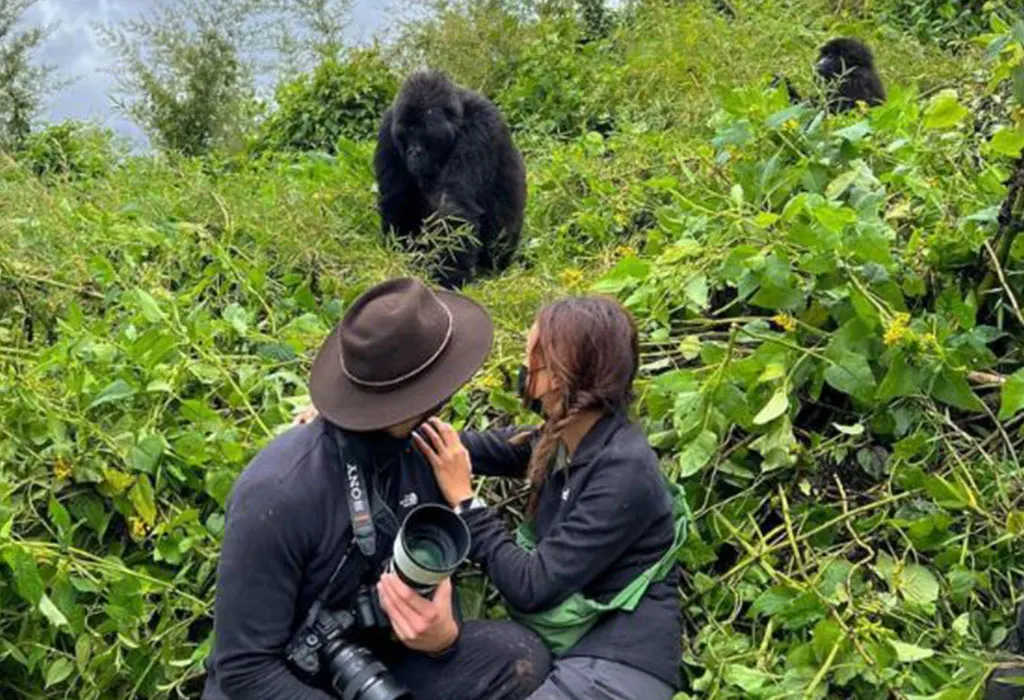
There is no single answer to the question, “What is the best gorilla family to see in Rwanda?” Every habituated mountain gorilla group has its own personality, social structure, location, and story. Your ideal choice will largely depend on your fitness, interests, trekking expectations, and the type of wildlife encounter you hope to enjoy in Volcanoes National Park.
For some travelers, the excitement of following gorillas through steep volcanic terrain is part of the adventure. Others prefer a group that may be easier to reach. Meanwhile, travelers interested in conservation history may appreciate families with strong links to Rwanda’s long-running gorilla research and protection efforts.
At Gorilla Vista Safaris, we encourage travelers to look beyond the idea of finding one “perfect” gorilla family. Instead, understanding the different groups helps you appreciate why every gorilla trekking experience in Rwanda can feel different.
How Do You Choose the Best Gorilla Family in Rwanda?
Before trekking, several factors can influence the experience. The most important is the location of the gorilla family assigned to you on the day of your trek. Visitors generally cannot simply choose a particular family and expect to track it. Park authorities allocate groups according to operational considerations, conservation requirements, and other factors.
Therefore, it is useful to prepare for the trek rather than become too focused on one specific family.
Your physical fitness is particularly important. Gorilla families may range across rugged volcanic slopes, and the distance and terrain can change considerably from one trek to another. A group that looks close on a map may still require a demanding hike through thick vegetation and uneven ground.
Your interests matter, too. Consider whether you are particularly interested in:
- Photographing playful youngsters and active social interactions.
- Observing silverbacks and family relationships.
- Learning about Rwanda’s gorilla conservation history.
- Enjoying a challenging mountain hike.
- Having a quieter and more intimate wildlife encounter.
This approach makes it easier to appreciate whichever gorilla family you eventually track.
Susa A Family: A Group Rich in History
The Susa A Family, often simply called the Susa group, has one of the most recognizable histories among Rwanda’s gorilla families. The group became particularly famous through the work of Dian Fossey and the researchers who studied mountain gorillas in the Virunga region.
Susa A has also attracted attention because of its social dynamics and memorable individual gorillas. In the past, the group included famous twins, Byishimo and Impano, who became well known among visitors and conservation enthusiasts.
The group’s historical significance adds another dimension to a trek. You are not simply walking through a forest to find gorillas; you are entering a landscape where decades of scientific research and conservation have shaped our understanding of these animals.
However, the location of gorilla families can change, and Susa-related groups have occupied higher elevations. Consequently, trekking conditions can be demanding.
Susa A may appeal particularly to travelers who enjoy:
- Gorilla conservation history.
- Challenging mountain hikes.
- Learning about individual gorillas.
- The wider story of Dian Fossey’s research.
Karisimbi Family: A High-Altitude Gorilla Trek
The Karisimbi Family, historically associated with the Susa group and sometimes referred to as Susa B, provides another interesting example of gorilla social organization.
Gorilla groups can split when social conditions change, particularly as mature males and other members establish new groups. Watching how these relationships develop gives travelers a fascinating glimpse into the complex social lives of mountain gorillas.
Karisimbi is associated with the slopes of Mount Karisimbi, one of the major volcanoes in the Virunga range. Consequently, trekking in this area can involve steep terrain and considerable physical effort.
For experienced hikers, the demanding terrain can become an important part of the adventure. Nevertheless, trekking difficulty varies, so visitors should not assume that every trek to this family will follow exactly the same route.
Sabyinyo Family: A Popular Choice for Easier Treks
The Sabyinyo Family is often associated with the lower slopes around Mount Sabyinyo and has historically been regarded as one of the more accessible gorilla groups.
This can make Sabyinyo particularly attractive to travelers who want to experience gorilla trekking in Rwanda without deliberately seeking the most demanding hike. However, “easier” does not mean effortless. Volcanoes National Park remains a mountainous environment, and conditions can change depending on weather and the gorillas’ movements.
The group also offers the opportunity to observe different generations living together. Young gorillas can be particularly entertaining, while adults and silverbacks provide a closer look at the social structure of the family.
For travelers concerned about trekking difficulty, Sabyinyo is therefore a group worth discussing with a reputable safari operator before the trek.
Amahoro Group: A Family Known for Its Name
The Amahoro Group is another well-known gorilla family in Volcanoes National Park. The word Amahoro means “peace” in Kinyarwanda, which gives the group an appealing identity for visitors.
Travelers often value Amahoro for the opportunity to watch natural behaviors at close range, including feeding, grooming, resting, and interactions between adults and youngsters.
However, the peaceful nature suggested by its name does not mean the hike will necessarily be easy. The gorillas live in a mountainous environment, and reaching them can involve steep sections depending on their location.
As with every gorilla trek, patience is important. The forest is not a zoo, and gorillas do not follow a fixed schedule for visitors.
Titus Family: A Connection to Gorilla Research
The Titus lineage holds an important place in the history of mountain gorilla research. Titus was a famous silverback studied extensively by Dian Fossey and later researchers, and his story became closely associated with the complex social lives of mountain gorillas.
It is important to distinguish historical research references from the current composition of habituated gorilla groups. Gorilla families naturally change over time as individuals die, transfer between groups, or establish new social relationships.
For travelers interested in the scientific and conservation history behind Rwanda’s gorilla tourism, the Titus story adds valuable context to the wider trekking experience.
Which Gorilla Family Should You Expect?
One of the most important things to understand about the best gorilla family to see in Rwanda is that visitors should not build their entire trip around securing one particular group.
Gorilla trekking is carefully managed to protect the animals and their habitat. Your safari operator can explain the current procedures, while park authorities determine the group allocation according to the rules and conditions in place.
Instead of focusing only on a particular family, prepare for the overall experience:
- Wear sturdy hiking shoes with good grip.
- Carry enough drinking water for the trek.
- Bring waterproof clothing because mountain weather changes quickly.
- Use a walking stick if the terrain is difficult.
- Follow the ranger’s instructions throughout the encounter.
- Keep a respectful distance from the gorillas.
These simple preparations can make a significant difference to your comfort and enjoyment.
What Makes Rwanda Gorilla Trekking Special?
The real attraction of Rwanda gorilla trekking goes beyond the name of the family you visit. Volcanoes National Park protects a remarkable mountain ecosystem where bamboo, montane forest, volcanic slopes, and wildlife come together.
Once you find the gorillas, the experience can become surprisingly personal. You may watch a youngster playing beside its mother, see a silverback resting nearby, or observe several members grooming one another.
These ordinary moments are often what travelers remember most.
Moreover, gorilla tourism contributes to a broader conservation system that supports protection of the habitat and creates economic opportunities connected to tourism. Responsible trekking therefore allows visitors to enjoy the forest while contributing to the continued protection of mountain gorillas.
Final Thoughts on the Best Gorilla Family to See in Rwanda
So, what is the best gorilla family to see in Rwanda? Rather than choosing one group as universally superior, consider what you want from your trek.
Susa A and Karisimbi can appeal to travelers interested in challenging terrain and gorilla history. Sabyinyo may suit visitors looking for a potentially more accessible trekking experience, while Amahoro can appeal to those interested in observing social behavior and family interactions. The historical story surrounding Titus also adds depth for travelers fascinated by gorilla research.
Ultimately, the family you encounter is only one part of the experience. The forest, the hike, the ranger’s knowledge, and the behavior of the gorillas all contribute to the memories you take home.
Gorilla Vista Safaris can help you prepare for gorilla trekking in Rwanda by arranging the essential components of your safari and helping you understand what to expect before entering Volcanoes National Park. With realistic expectations and proper preparation, every habituated gorilla family can offer a remarkable window into the lives of mountain gorillas.