- DIRECT CONTACTS:
- +256 779 116 947
- +256 758 566 300
- info@gorillavistasafaris.com

Popular Walking Safaris in Uganda
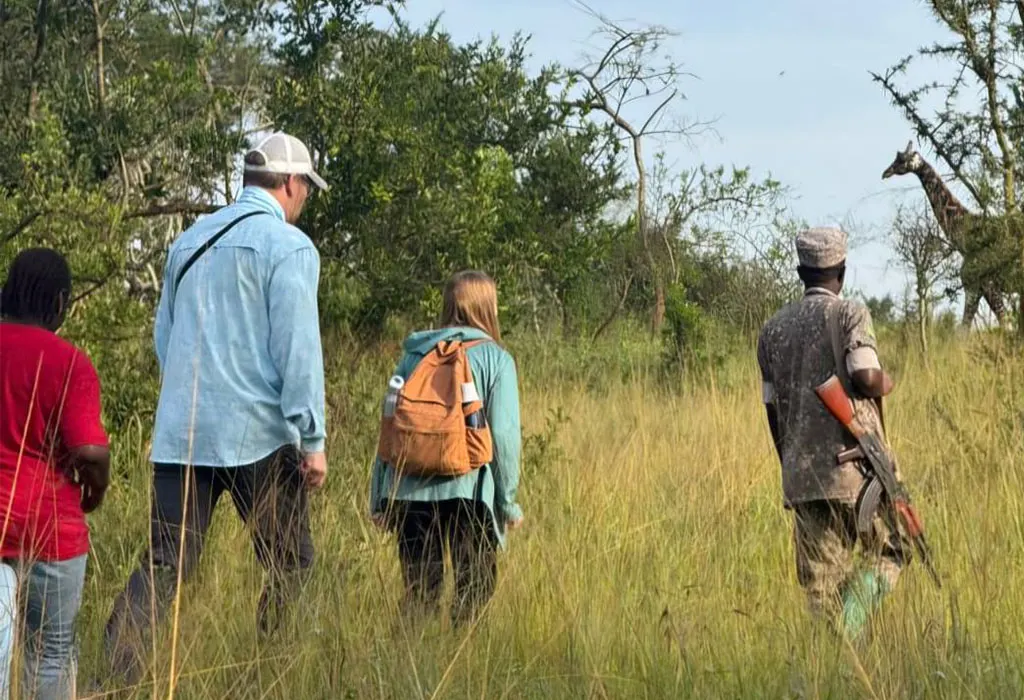
Walking safaris in Uganda offer a refreshing way to experience the country’s remarkable landscapes, wildlife, forests, wetlands and local communities. Instead of viewing nature only from a safari vehicle, you explore it on foot, giving you more time to notice the small details that often go unnoticed. The sounds of birds, fresh scents from the forest, animal tracks and changing vegetation all become part of the experience.
For travelers who enjoy nature, photography, birding, wildlife and cultural encounters, a walking safari provides an opportunity to experience Uganda at a slower and more engaging pace. Many walks are guided by experienced rangers or community guides who explain the plants, animals, traditions and landscapes along the way.
Gorilla Vista Safaris can help travelers combine walking experiences with Uganda’s other attractions, including gorilla trekking, chimpanzee tracking, wildlife safaris and cultural encounters. Since some trails can be demanding, travelers should consider their fitness level when choosing a walking experience.
Mountain Gorilla and Chimpanzee Trekking
Uganda is one of Africa’s leading destinations for primate experiences, and gorilla and chimpanzee trekking remain among its most sought-after activities. These experiences take visitors into natural forest habitats where they can observe primates in their protected environments.
Mountain gorilla trekking takes place in Bwindi Impenetrable National Park and Mgahinga Gorilla National Park in southwestern Uganda. Guided treks can involve steep slopes, thick vegetation and muddy trails, but the experience of finding a gorilla family in the forest makes the effort worthwhile.
Chimpanzee trekking, meanwhile, is particularly popular in Kibale National Park, which is renowned for its diverse primate population. Walking through the forest while listening for chimpanzee calls creates an exciting connection with the surrounding ecosystem. Other primates, birds and forest creatures can also appear along the trails.
Walking with Rhinos at Ziwa Rhino Sanctuary
Ziwa Rhino Sanctuary provides a unique opportunity to approach white rhinos on foot under the guidance of trained rangers. Located in central Uganda, the sanctuary protects rhinos while also conserving woodland, savannah and wetland habitats.
During a guided walk, visitors follow rhino tracks and observe these impressive animals as they feed or rest. Rangers also explain rhino behaviour, social interactions, conservation challenges and the importance of protecting their habitat.
The experience goes beyond rhino viewing because the sanctuary also supports a variety of birds and other wildlife. Consequently, visitors interested in both conservation and nature can gain a broader understanding of Uganda’s wildlife protection efforts.
Walking Safari in Lake Mburo National Park
Lake Mburo National Park is one of the best places in Uganda for a traditional walking safari. Unlike many savannah parks where visitors primarily explore by vehicle, Lake Mburo allows visitors to experience the wilderness on foot with trained ranger guides.
The park features rolling hills, open grasslands, acacia woodland, wetlands and several lakes. Its varied habitats support animals such as zebras, impalas, giraffes, elands, waterbucks, topi and bushbucks.
Morning and evening walks provide different experiences because wildlife activity changes throughout the day. Early walks often offer cooler temperatures and active wildlife, while evening excursions allow visitors to enjoy the changing light across the savannah.
Birdwatchers can also benefit from walking here. The combination of woodland, grassland and wetland habitats attracts numerous bird species, making the park particularly appealing to nature enthusiasts.
Exploring Kidepo Valley National Park on Foot
Kidepo Valley National Park offers some of Uganda’s most remote and dramatic wilderness experiences. Located in the country’s northeastern region, the park features expansive savannah plains, rugged mountains, rocky landscapes and seasonal river valleys.
Guided walks provide a different perspective of Kidepo because visitors can move away from the vehicle and concentrate on tracks, plants, insects, birds and smaller wildlife. The Kidepo River area, with its Borassus palms and open landscapes, provides an interesting setting for nature walks.
The Narus Valley is another important area because its water sources attract wildlife, particularly during dry periods. Depending on the route and conditions, visitors may encounter elephants, buffaloes and other animals.
For travelers interested in culture, a visit to the Ik community around Mount Morungole can add another dimension to a Kidepo adventure. Such visits should be arranged responsibly and with respect for local customs and community guidelines.
Batwa Cultural Walks
A Batwa cultural walk provides an opportunity to learn about the history and traditions of communities whose ancestors lived in the forests of the Albertine Rift. The Batwa have a long connection with the forests of southwestern Uganda and neighbouring parts of Rwanda and the Democratic Republic of Congo.
Around Bwindi and Mgahinga, community-led experiences introduce visitors to traditional knowledge, forest practices, food, medicinal plants, music, storytelling and cultural traditions.
These experiences are particularly meaningful when visitors take time to listen to community members and understand how conservation and changes in land use have affected local livelihoods. By participating in a community-guided experience, travelers can contribute directly to local tourism initiatives.
Buhoma to Nkuringo Walk Through Bwindi
The trail between Buhoma and Nkuringo provides one of the most rewarding long-distance walking experiences in Bwindi Impenetrable National Park. The route crosses the forest between two important gorilla trekking areas and offers travelers a chance to experience Bwindi beyond a standard gorilla trek.
The walk passes through thick rainforest, changing vegetation and hilly terrain. Along the way, visitors may encounter birds, butterflies, monkeys and other forest life while enjoying views of the surrounding highlands.
The route can take several hours depending on the pace, trail conditions and stops along the way. Therefore, travelers should prepare for a physically demanding day and carry suitable hiking shoes, drinking water and rain protection.
Bigodi Wetland Walk
Bigodi Wetland Sanctuary, located near Kibale National Park, is another excellent destination for walking enthusiasts. The community-managed wetland features trails through swamp, woodland and riverine vegetation, creating a habitat for numerous birds and primates.
Visitors may encounter red-tailed monkeys, black-and-white colobus monkeys, vervet monkeys, olive baboons and other wildlife. Chimpanzees may occasionally move through the wider area, although sightings are not guaranteed on the wetland walk.
The experience becomes even more rewarding with a knowledgeable local guide. Guides explain the importance of the wetland, identify different bird species and share information about how the surrounding community benefits from conservation and tourism.
Sempaya Hot Springs Walk
The Sempaya Hot Springs in Semuliki National Park combine forest exploration with an impressive geological attraction. The walking trail leads through lowland forest toward the famous male and female hot springs.
Along the way, visitors can look for forest birds, primates, butterflies and different plant species. At the hot springs, boiling water and steam emerge from the ground, demonstrating the geothermal activity beneath the area.
The springs also hold cultural importance for local communities. As a result, a visit can combine nature, geology and cultural interpretation in one experience.
Katwe Salt Lake Walking Tour
The Katwe area near Queen Elizabeth National Park offers a fascinating cultural and nature-based walking experience. Local residents have traditionally extracted salt from the shallow saline lake using methods that have been passed down through generations.
A guided walk around the area allows visitors to observe salt pans and learn how evaporation and traditional techniques support local livelihoods. The surrounding crater landscape also provides attractive views for photography.
Nearby Munyanyange Crater Lake can add another interesting stop, particularly for birdwatchers when seasonal flamingos and other waterbirds are present.
Walking Around Lake Bunyonyi
Lake Bunyonyi is surrounded by the rolling hills of southwestern Uganda and provides numerous opportunities for relaxed walks. The area’s high elevation, terraced hillsides and numerous islands create beautiful scenery throughout the region.
Local guides can lead visitors along community trails where they can observe farms, meet residents and learn about everyday life around the lake. Travelers can also combine a walking experience with canoeing, visits to craft groups and other community activities.
Sipi Falls and Coffee Experience Walk
The Sipi Falls area on the slopes of Mount Elgon combines waterfalls, mountain scenery and coffee culture. Community guides lead visitors along trails through villages, farms and landscapes surrounding the three waterfalls.
The largest waterfall drops approximately 100 metres, creating an impressive sight as water descends over the cliffs. However, the experience is not only about scenery. Visitors can also learn about Arabica coffee production, from cultivating and harvesting the beans to processing, roasting and preparing a cup.
This combination of hiking and cultural learning makes Sipi Falls an excellent addition to a Uganda adventure.
Experience Uganda on Foot with Gorilla Vista Safaris
Walking safaris allow travelers to experience Uganda from a different perspective. Whether you are tracking wildlife at Lake Mburo, searching for rhinos at Ziwa, exploring Bwindi, walking through Bigodi Wetland or learning about coffee around Sipi Falls, each trail reveals a different side of the country.
Gorilla Vista Safaris can help you combine these walking experiences with gorilla trekking, chimpanzee tracking, wildlife viewing and cultural encounters to create a Uganda safari that matches your interests, available time and fitness level.